
Bitsdaq was never meant to be another forgotten crypto exchange. When it launched, it had real ambition: a flat 0.10% trading fee, a partnership with Bittrex for deeper liquidity, and a security system built with encrypted key fragmentation across multiple locations. For a while, it looked like it might carve out a niche in Asia’s crowded crypto market. But today, Bitsdaq is gone. No website. No customer support. No trading. Just a ghost in the crypto graveyard.
What Bitsdaq Offered (When It Was Alive)
At its peak, Bitsdaq offered over 300 trading pairs, mostly crypto-to-crypto. You couldn’t deposit dollars, euros, or yen directly. If you wanted to trade on Bitsdaq, you had to buy Bitcoin or Ethereum first on another exchange like Binance or Coinbase, then send it over. That was a hurdle for beginners, but not unusual for smaller exchanges back then. Its fee structure stood out. While most exchanges charged 0.25% or more, Bitsdaq charged a flat 0.10% for everyone - whether you were making a market order or taking one. That meant less guesswork. No hidden maker-taker tiers. Just a simple, predictable cost per trade. Withdrawals were straightforward: 0.0006 BTC per Bitcoin withdrawal. That matched industry norms. The platform used CloudFlare for DDoS protection, fought off XSS and CSRF attacks, and stored wallet keys in multiple encrypted locations. No single point of failure. That level of security was rare for a mid-tier exchange.The Bittrex Partnership: Real or Just Marketing?
Bitsdaq’s biggest claim to fame was its technical partnership with Bittrex. At first, people were skeptical. Was this just a branding move? A way to look bigger? Turns out, it was real. Bittrex wallet addresses were among the top holders of Bitsdaq’s native token, BQQQ. That wasn’t coincidence - it was proof of shared infrastructure. The two exchanges linked their order books. That meant if you placed a buy order for LTC/BTC on Bitsdaq, you weren’t just competing with other Bitsdaq users. You were also matching with orders from Bittrex’s larger pool of traders. This was huge for liquidity. Most small exchanges suffer from thin order books. Spreads widen. Slippage kills profits. Bitsdaq solved that by piggybacking on Bittrex’s depth. For active traders, that meant tighter spreads and faster fills - especially on less popular coins.The BQQQ Token: High Hopes, Low Returns
Bitsdaq launched its own token, BQQQ (sometimes called BQ), through an IEO in 2018. They sold 11.8% of the total supply - 1.18 billion tokens - for $6.5 million. That gave the project a $55 million market cap at launch. BQQQ wasn’t just a speculative asset. It had real utility: you could use it to pay trading fees (with a small discount), participate in future IEOs on the platform, and even vote on platform upgrades. CryptoPotato gave the token’s use case an 8.7/10 - one of the highest scores in their review. But the token sale had a dark side. Nearly half the tokens went to private investors at 50% discounts. Over 95% of all BQQQ tokens were locked up in the hands of insiders and early backers. That meant retail investors had almost no chance to influence the token’s price. It was a setup for manipulation. By 2024, BQQQ was trading around $0.005. Some sites still claimed it could hit $0.007869 by the end of the year. But those predictions were meaningless. Bitsdaq had already shut down. The token’s “100% green days” and “zero volatility” weren’t signs of strength - they were signs of death. No one was trading it. The charts were just ghosts.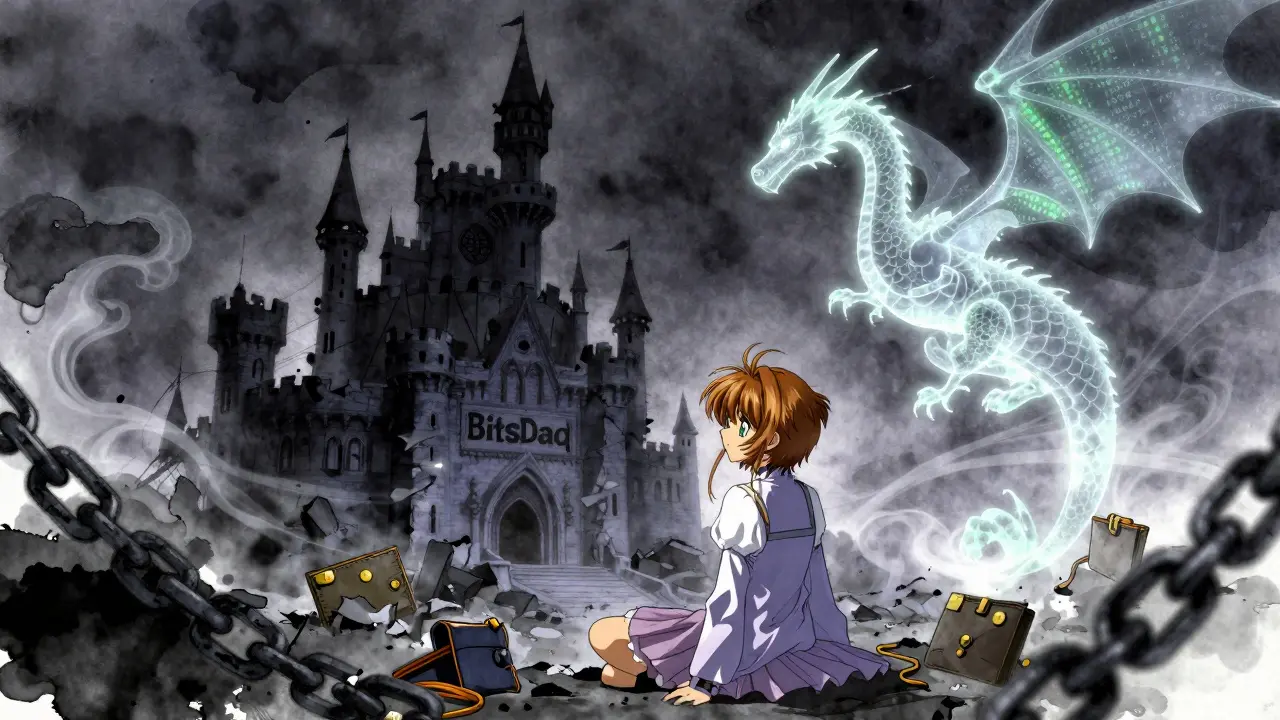
Why Did Bitsdaq Fail?
It wasn’t the tech. The security was solid. The fee structure was competitive. The Bittrex partnership was legitimate. So what went wrong? First, it was too small. While Binance was adding hundreds of new coins and launching its own blockchain, Bitsdaq stayed stuck in the middle. It didn’t have the marketing budget. It didn’t have the brand recognition. It didn’t even have fiat on-ramps - a major disadvantage as retail crypto adoption exploded. Second, it didn’t adapt. When other exchanges started offering staking, lending, and DeFi integrations, Bitsdaq stayed focused on spot trading. It didn’t build a mobile app. It didn’t launch a wallet. It didn’t expand into derivatives. It stayed narrow, and the market moved on. Third, the tokenomics backfired. With over 95% of BQQQ held by insiders, confidence eroded. Traders saw it as a project for insiders, not users. Even with good features, people didn’t trust it. By 2025, the website went dark. Customer support vanished. Social media accounts stopped posting. Cryptowisser officially labeled it “dead.”What You Should Learn From Bitsdaq
Bitsdaq’s story isn’t just about one failed exchange. It’s a lesson for anyone thinking about using a small crypto platform.- Check if the exchange is still active. A dead website means your funds are gone. No one is there to help you.
- Don’t trust token hype. If insiders hold 95% of the supply, the token’s value is controlled by a few people - not the market.
- Fiat on-ramps matter. If you can’t deposit dollars directly, you’re making your own life harder.
- Partnerships aren’t magic. Bittrex helped Bitsdaq, but it couldn’t save it from poor strategy and lack of growth.
Where to Trade Now
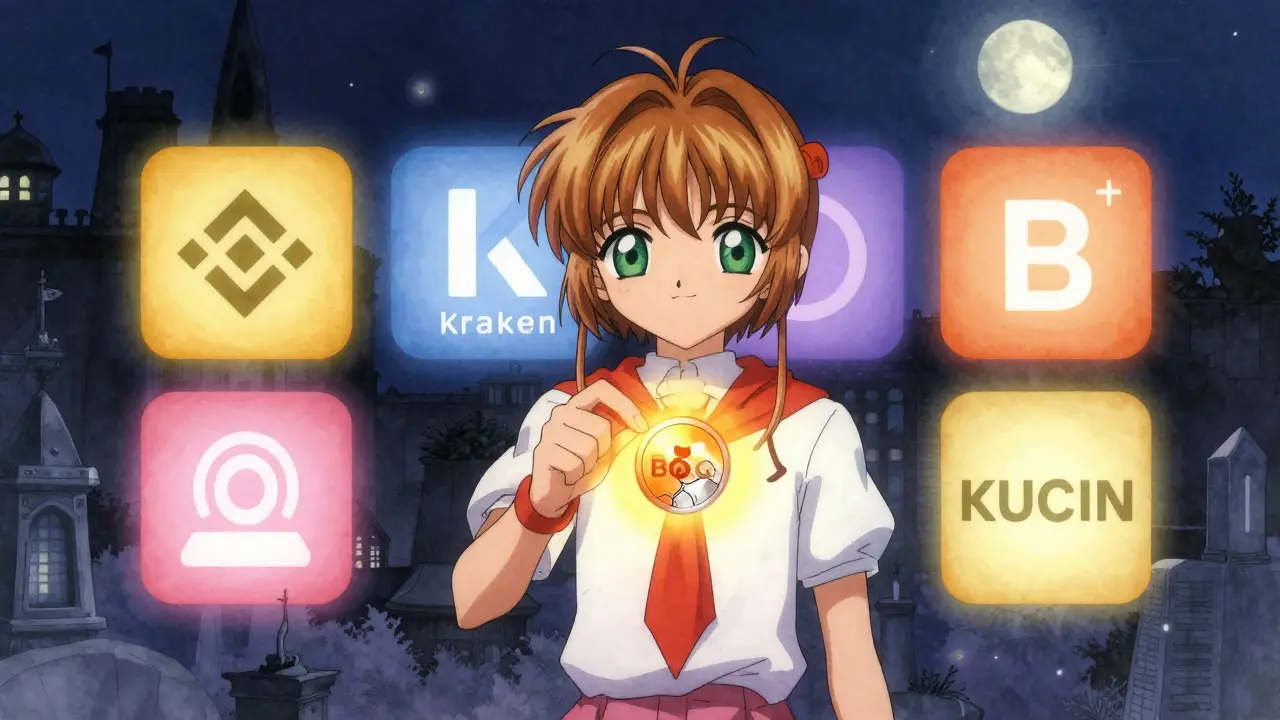
If you’re looking for a reliable exchange with low fees and strong security, here are your better options:- Binance - Largest volume, 600+ trading pairs, fiat on-ramps, staking, and lending.
- Kraken - Strong security, transparent fees, supports fiat deposits, and regulated in the U.S. and EU.
- Bybit - Excellent for futures and spot trading, 0.1% flat fee, strong liquidity.
- KuCoin - Over 700 coins, good for altcoins, low fees, and a strong community.
Final Verdict
Bitsdaq had potential. It had smart tech. It had a real partnership. But it lacked the vision to scale. It didn’t build a community. It didn’t listen to users. It didn’t evolve. Today, Bitsdaq is a cautionary tale. Don’t let nostalgia or past promises blind you. If an exchange is dead, walk away. No amount of past performance or token hype can bring it back. Your crypto isn’t safe in a graveyard. It needs a living platform.Is Bitsdaq still operational in 2026?
No, Bitsdaq is permanently closed. Its website no longer loads, customer support is unreachable, and all trading functions have been shut down. As of 2025, Cryptowisser officially listed it as "dead" in its Exchange Graveyard.
Can I still withdraw my funds from Bitsdaq?
No. Since the exchange shut down, all withdrawal systems were disabled. Any funds left on Bitsdaq are likely lost. This is why you should never keep large amounts of crypto on any exchange - especially smaller ones with limited track records.
What happened to the BQQQ token?
The BQQQ token still exists on a few decentralized exchanges, but trading volume is near zero. Its price of around $0.005 reflects no real market demand - just residual listings. Since Bitsdaq is gone, the token has no utility, no team behind it, and no roadmap. It’s effectively worthless.
Why did Bitsdaq partner with Bittrex?
Bitsdaq partnered with Bittrex to solve its biggest weakness: low liquidity. By linking order books, traders on Bitsdaq could access Bittrex’s deeper market depth, leading to tighter spreads and better trade execution. The partnership was verified when Bittrex wallet addresses were found holding large amounts of BQQQ tokens - proving it wasn’t just marketing.
Was Bitsdaq safe to use before it shut down?
Yes, technically. Bitsdaq had strong security features: encrypted wallet key fragmentation, DDoS protection, and protection against common web attacks. It never suffered a major hack. However, safety isn’t just about tech - it’s about sustainability. Even a secure exchange can vanish overnight if it lacks funding, users, or leadership.
Should I avoid small crypto exchanges altogether?
Not necessarily. Many small exchanges offer unique features or lower fees. But you should avoid ones without clear funding, transparent teams, or active development. Always check if the exchange is listed on trusted aggregators like CoinGecko or CoinMarketCap, and look for recent updates on their official channels. If there’s no activity in the last 6 months, treat it as potentially dead.