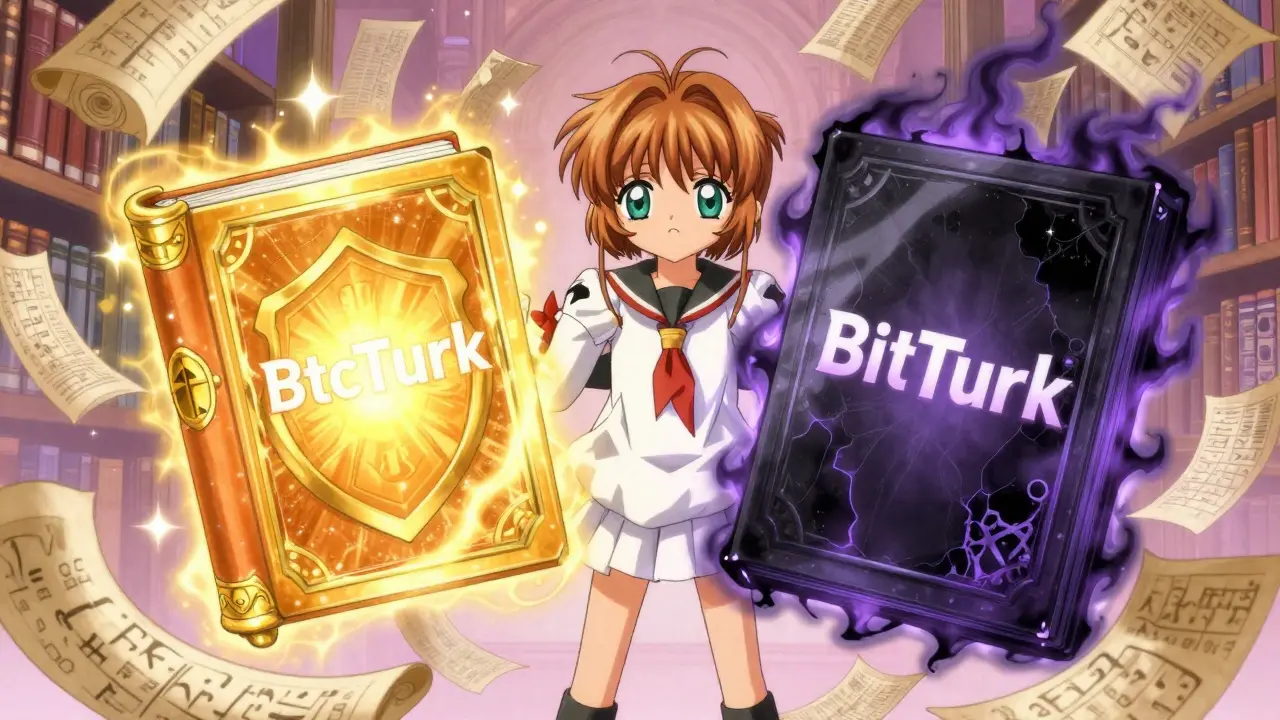
Have you ever typed "BtcTurk" into your browser, only to land on a site called BitTurk that looks almost identical?
If so, you are not alone. This confusion is the single biggest risk facing anyone looking at this platform today. In the world of cryptocurrency, small spelling differences often hide massive operational gaps. While BtcTurk is Turkey’s largest and most regulated exchange, BitTurk is a shadowy entity with no verifiable trading volume, no clear regulatory license, and a history of causing user anxiety due to its deceptive naming.
This review cuts through the noise. We will separate fact from fiction, check the regulatory boxes, and tell you exactly where your money stands if you decide to use this platform in 2026.
The Name Game: BitTurk vs. BtcTurk
Before we look at fees or features, we must address the elephant in the room. The name BitTurk is dangerously close to BtcTurk. This isn’t just a typo; it’s a pattern seen in phishing attempts across the industry.
BtcTurk, founded in July 2013, is a household name in Turkey. It holds over 85% of the domestic market share and is fully compliant with local laws. In contrast, BitTurk claims to be the "first Turkey crypto money Exchange" but lacks any independent verification for this claim. Founded in 2017, it operates under the domain bitturk.com. The similarity is striking enough that Reddit users have repeatedly warned others about copycat sites using "Turk" in their names to attract unsuspecting investors.
| Feature | BitTurk (bitturk.com) | BtcTurk (btcturk.com) |
|---|---|---|
| Founded | 2017 | 2013 |
| Regulatory Status (SPK) | Not Listed / Unclear | Licensed & Compliant |
| Market Share (Turkey) | <2% | ~85% |
| Cryptocurrencies Supported | Limited (BTC, ETH, etc.) | 100+ |
| User Reviews | Extremely Low / Fragmented | High Volume / Verified |
| Risk Level | High | Low (Standard Market Risk) |
The takeaway here is simple: if you are looking for the established, trusted Turkish exchange, you want BtcTurk. If you are looking at BitTurk, you are stepping into uncharted territory with significantly higher risks.
Regulatory Red Flags in 2026
In January 2025, Turkey’s Capital Markets Board (SPK) implemented strict new licensing requirements for all cryptocurrency exchanges operating within the country. This was a watershed moment for the industry. Any exchange wanting to operate legally had to register and obtain specific authorization.
As of mid-2026, BitTurk does not appear on the SPK’s official list of licensed operators. This absence is critical. According to Delphi Digital’s regional analysis, exchanges without clear regulatory compliance in emerging markets have less than a 30% survival probability over an 18-month period. Without a license, BitTurk offers no legal recourse if things go wrong. If the platform freezes your funds or disappears, you cannot appeal to Turkish financial authorities.
Furthermore, Cryptolegal.uk has issued warnings about fake crypto exchanges using similar names to legitimate platforms. While BitTurk wasn’t explicitly named as a scam in their September 2025 update, the general warning applies: operating without proper Turkish licensing carries imminent shutdown risks. For a trader, this means your account could be frozen overnight with no explanation and no way to get your assets back.
Security and Transparency Gaps
When you deposit money into an exchange, you are trusting them with your private keys. Big players like Binance or Coinbase publish regular proof-of-reserves audits and detail their cold storage percentages. What does BitTurk offer?
Virtually nothing. Their website claims "robust security features" and mentions Google Authenticator integration for two-factor authentication (2FA). That is good, but it is the bare minimum. There are no published details about:
- Cold storage allocation (how much of your money is offline?)
- Insurance coverage for digital assets
- Third-party security audit reports
- Proof of reserves
This lack of transparency is a major red flag. In the crypto world, "trust us" is not a security protocol. Without audited data, you have no idea if the exchange actually holds the assets they say they do. Given the platform's limited presence in global indices like CoinGecko or CoinMarketCap, there is no external validation of their liquidity or solvency.

User Experience and Support Realities
Let’s talk about what it feels like to use the platform. BitTurk advertises 24/7 customer support and a multilingual interface. However, user reports from late 2025 paint a different picture.
Non-Turkish speakers face significant barriers. The English interface appears to be machine-translated, leading to confusing instructions and potential errors during trade execution. More importantly, support response times for non-Turkish queries are described as slow. If you are an international user trying to resolve a withdrawal issue, you might find yourself waiting days for a reply, if you get one at all.
For Turkish users, the barrier to entry is also tricky. Registration often requires local phone numbers and ID verification that can be cumbersome. Yet, despite these hurdles, the platform offers little in return. The learning curve is minimal only because the feature set is basic. You won’t find advanced charting tools, sophisticated API documentation for algorithmic trading, or deep order books. It is a stripped-down experience compared to competitors.
Fees, Limits, and Hidden Costs
One of the most frustrating aspects of researching BitTurk is the silence around pricing. Major exchanges publish their fee schedules clearly. BitTurk’s fee structure, withdrawal limits, and minimum deposit requirements are not documented in any authoritative industry publication as of October 2025.
This opacity is dangerous. Here is why:
- Unpredictable Costs: You might sign up expecting low commissions, only to find hidden spreads or high withdrawal fees when you try to move your money out.
- No Competitive Benchmarking: Without knowing the fees, you cannot compare BitTurk to cheaper alternatives like Binance or Kraken.
- Trust Issues: Why would a legitimate business hide its pricing? Usually, it suggests they are relying on volume rather than value, or they change terms arbitrarily.
Slashdot’s comparative analysis explicitly stated "No price information available" for BitTurk. In a market where fees can make or break your profit margin, this lack of data is a dealbreaker for serious traders.

Is BitTurk Worth the Risk?
So, who is BitTurk for? Based on the available data, the answer is: almost no one.
If you are a novice Turkish trader attracted by the localized interface, you are likely unaware of the regulatory gaps. You might think you are signing up for a safe, local service, but you are actually joining an unlicensed platform with less than 2% market adoption. If you are an international user, the language barriers, lack of fiat on-ramps, and security concerns make it a poor choice.
The platform’s future looks bleak. With no roadmap updates since 2023 and increasing regulatory pressure in Turkey, BitTurk is sitting in a precarious position. Independent analysts suggest that unregulated exchanges in this region are high-risk bets. Your capital is safer on platforms that prioritize transparency, regulation, and user protection.
Instead of BitTurk, consider sticking with the giant in the room: BtcTurk. Or, if you need international access, look at globally recognized exchanges like Binance, Coinbase, or Kraken, which offer robust security, clear fee structures, and regulatory compliance in multiple jurisdictions.
Final Verdict
BitTurk fails the basic tests of trust. It lacks regulatory licensing, transparent fees, verified security audits, and a substantial user base. Its primary distinguishing feature-its name-is also its greatest liability, as it confuses users seeking the reputable BtcTurk. In 2026, with tighter regulations and more secure options available, there is no logical reason to choose BitTurk. Protect your assets by choosing platforms that have nothing to hide.
Is BitTurk the same as BtcTurk?
No, they are completely different companies. BtcTurk (btcturk.com) is Turkey's largest and regulated crypto exchange, founded in 2013. BitTurk (bitturk.com) is a separate, smaller, and unregulated platform founded in 2017. The similar names often cause confusion and potential phishing risks.
Is BitTurk licensed by the Turkish government?
As of 2026, BitTurk is not listed on the official registry of the Turkish Capital Markets Board (SPK). This means it operates without the required legal license for cryptocurrency services in Turkey, posing significant legal and financial risks to users.
What cryptocurrencies does BitTurk support?
BitTurk supports a very limited selection of major cryptocurrencies, primarily Bitcoin (BTC), Ethereum (ETH), Ripple (XRP), and Chainlink (LINK). It does not offer the wide variety of altcoins found on larger exchanges like BtcTurk or Binance.
Are my funds safe on BitTurk?
There is no evidence to suggest your funds are safe. BitTurk does not publish proof of reserves, insurance policies, or third-party security audits. Combined with its lack of regulatory oversight, this creates a high risk of loss in the event of a hack or platform failure.
Why is there so little information about BitTurk fees?
BitTurk does not publicly document its trading fees, withdrawal limits, or deposit requirements in any authoritative source. This lack of transparency is unusual for legitimate exchanges and makes it difficult for users to calculate costs or compare services.
Can international users use BitTurk?
While the platform claims to have a multilingual interface, international users face significant barriers. Registration often requires local Turkish identification and phone numbers. Additionally, the English interface is reportedly machine-translated and prone to errors, making it unsuitable for non-Turkish speakers.