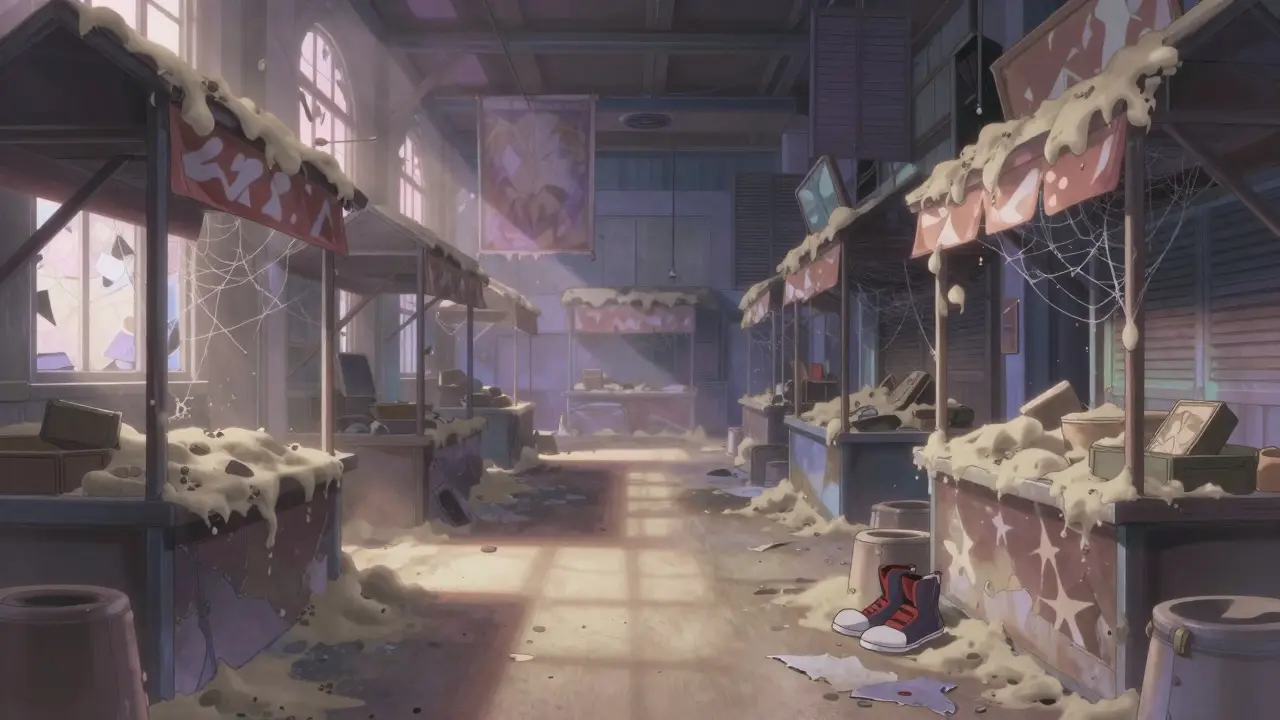
Imagine logging into a bustling marketplace, only to find the stalls empty, the merchants gone, and the silence so thick you can hear your own heartbeat. That is exactly what happens when you visit CheeseSwap today. Once pitched as a one-stop shop for decentralized finance on the Binance Smart Chain, this platform now sits in a state of eerie dormancy. If you are holding CHEESE tokens or considering buying them because you saw an old tutorial, stop right there. The numbers don’t lie, but they do tell a cautionary tale about the wild west of DeFi.
Is CheeseSwap still active in 2026?
No. With near-zero trading volume and stagnant prices, CheeseSwap appears effectively dormant.
The Ghost Town Reality
Let’s cut through the noise. When we talk about a decentralized exchange built on Binance Smart Chain, we usually expect speed, low fees, and vibrant activity. CheeseSwap launched with all that promise back in 2020. It aimed to combine swapping, farming, staking, and yield pooling into a single interface. Sounds convenient, right? You shouldn't have to jump between five different apps to manage your crypto portfolio. But convenience means nothing if the engine isn't running.
As of May 2026, the data paints a grim picture. The CHEESE token has seen virtually no trading action. Major trackers like CoinGecko report a 24-hour trading volume of roughly $9.81. Yes, nine dollars. CoinMarketCap reports zero. For context, major competitors like PancakeSwap process hundreds of millions in daily volume. Uniswap processes billions. CheeseSwap is not just lagging; it is invisible. A market cap of around $30,000 indicates that this project has lost almost all its institutional and retail interest. It is a ghost town where the few remaining visitors are likely just checking their abandoned bags.
Price Performance: A Steep Decline
If you bought into CheeseSwap during its hype cycle, you are looking at significant losses. The token hit its all-time high of $0.002417 back in August 2021. Today, it trades at fractions of a cent-specifically around $0.00000018. That is a drop of approximately 99.99%. To put that in perspective, if you invested $1,000 at the peak, you would be holding less than two cents worth of value today. Even more concerning is the lack of recovery. While the broader crypto market fluctuates, bouncing up and down with Bitcoin's movements, CheeseSwap has remained flat. It didn't crash dramatically recently; it just stopped moving entirely. This stagnation suggests there is no buyer pressure left to drive the price up.
| Metric | Value | Status |
|---|---|---|
| Current Price | $0.00000018 | Critical Low |
| All-Time High | $0.002417 | Unreachable |
| 24h Volume | $0 - $9.81 | Non-Existent |
| Market Cap | $30.17K | Micro |
| Total Supply | 99.49 Billion | Fully Circulating |
Liquidity Crisis: The Silent Killer
In decentralized exchanges, liquidity is king. Liquidity allows you to swap your tokens for others without massive slippage. Without it, you are stuck. CheeseSwap suffers from a severe liquidity crisis. Because the trading pairs are dry, even small sell orders could crash the price further, or worse, you might not be able to sell at all. The primary trading pair, CHEESE/WBNB, exists mostly on PancakeSwap v2, not even on CheeseSwap itself. This is a red flag. If users aren't using the platform to trade its own native token, why would they use it for anything else?
Consider the mechanics. When you provide liquidity to a pool, you expect returns from trading fees. On CheeseSwap, with $10 in daily volume, those fees are negligible. Yield farmers look for high-volume pools to generate income. There is simply no incentive here. The "farm" and "staking" features mentioned in the original pitch are theoretical at best. Without new capital entering the system, these programs cannot sustain themselves. You cannot get blood from a stone, and you cannot generate yield from a vacuum.

Security and Trust Concerns
When a project goes quiet, security becomes a major concern. We do not have recent audit reports for CheeseSwap. In the early days of DeFi, many projects launched without rigorous third-party audits. As regulations tightened and standards improved, the bar raised significantly. Projects like Uniswap and SushiSwap undergo continuous security reviews. CheeseSwap lacks this transparency. If the development team has abandoned the codebase, vulnerabilities remain unfixed. Hackers often target dormant protocols because they know no one is watching the logs. Holding tokens in a wallet connected to a dead protocol carries inherent risk. Always prioritize platforms with active governance and transparent security practices.
Alternatives That Actually Work
You don't need CheeseSwap to access DeFi on the Binance Smart Chain. In fact, sticking with established leaders is safer and more profitable. Here is why you should pivot:
- PancakeSwap: The dominant DEX on BSC. It has deep liquidity, active yield farms, and a robust community. It handles everything CheeseSwap promised, plus much more.
- Uniswap: The gold standard for Ethereum-based swaps. If you want security and reliability, Uniswap is the go-to.
- SushiSwap: Offers cross-chain capabilities and innovative governance models. Great for diversifying your DeFi exposure.
These platforms have proven track records. They survive bear markets and thrive in bull runs. CheeseSwap did neither. Moving your assets to a liquid, active exchange ensures you can actually trade when you need to. It also exposes you to real yields rather than phantom promises.
Why Did It Fail?
Several factors contributed to CheeseSwap's decline. First, timing. Launching in 2020 meant competing during the initial DeFi boom. By 2021, the market saturated with dozens of similar DEXs. Without a unique technological advantage or a strong brand identity, CheeseSwap got lost in the crowd. Second, tokenomics. With nearly 100 billion tokens in circulation, supply was massive. High supply requires enormous demand to maintain value. Demand never materialized. Third, lack of innovation. Many DEXs offered copycat features. Users gravitated toward platforms with better user interfaces, lower fees, or stronger security reputations. CheeseSwap failed to differentiate itself.
Final Verdict: Avoid Unless Speculating
CheeseSwap is not a viable option for serious traders or investors in 2026. The lack of volume, the plummeted price, and the apparent abandonment make it a high-risk asset with no upside potential. If you hold CHEESE tokens, consider selling what little remains to minimize loss, though exit liquidity may be thin. Do not buy new positions hoping for a miracle rebound. In crypto, miracles are rare; fundamentals are constant. Stick to platforms with active communities, transparent audits, and real usage. Your capital deserves better than a digital ghost town.
Can I still buy CHEESE tokens?
Technically yes, via exchanges like KuCoin or PancakeSwap, but it is highly discouraged due to extreme illiquidity and value loss.
Is CheeseSwap safe to use?
Safety is questionable. Lack of recent audits and active maintenance increases vulnerability to exploits.
What happened to CheeseSwap developers?
There is no public information indicating active development. The project appears abandoned based on market metrics.
How does CheeseSwap compare to PancakeSwap?
PancakeSwap dominates in volume, liquidity, and user trust. CheeseSwap has negligible activity by comparison.
Will CHEESE token recover?
Recovery is highly unlikely without renewed development, marketing, and liquidity injection, none of which show signs of happening.