
You might think that because your wallet is on your phone, you’re safe from government reach. That’s a dangerous assumption if you live in the wrong place. The global landscape for cryptocurrency enforcement is a patchwork of strict bans, heavy taxation, and targeted criminal prosecutions that varies wildly by border has shifted dramatically since 2024. For the average user holding Bitcoin or Ethereum, the risk isn’t just about losing money to a scam; it’s about whether your mere possession or trading activity could land you in jail.
In 2026, we see a clear divide. On one side, authoritarian regimes are actively prosecuting individual users for simple transactions. On the other, democratic nations are focusing their fire on major criminal enterprises, leaving everyday traders alone-provided they pay their taxes. Understanding where you stand is critical. This isn’t just about compliance; it’s about personal freedom and financial safety.
The High-Risk Zone: Total Bans and Active Prosecution
If you want to know which countries prosecute crypto users most aggressively, look no further than the jurisdictions with total prohibitions. These aren’t countries that merely discourage crypto; they treat it as a crime.
China remains the gold standard for harsh enforcement. Since banning exchanges and Initial Coin Offerings (ICOs) in 2017, the government has systematically dismantled mining operations and cracked down on peer-to-peer trading. Chinese authorities don’t just block access; they actively pursue individuals. If you are caught engaging in crypto activities, you face severe penalties. The state’s hostility is comprehensive, targeting both the infrastructure and the end-user.
Close behind China are Algeria and Bolivia. Algeria has declared all crypto-related activities illegal, enforcing this with strict penalties. Bolivia’s Central Bank cites financial stability and fraud concerns to justify a complete prohibition. In these nations, there is no gray area. Holding, trading, or even discussing crypto can lead to criminal charges under existing financial crime statutes. These countries represent the highest possible prosecution risk for any user.
Bangladesh also falls into this high-risk category. Authorities classify crypto use as illegal under anti-money laundering and counter-terrorism financing laws. They have issued explicit warnings that involvement in transactions leads to fines or prison time. Unlike countries that ignore the issue, Bangladesh actively enforces its ban, making it a hostile environment for anyone interested in digital assets.
The Taxation Trap: De Facto Enforcement Without Jail Time
Not every country sends people to jail, but some make crypto so financially painful that it acts as a deterrent. This is the approach taken by India.
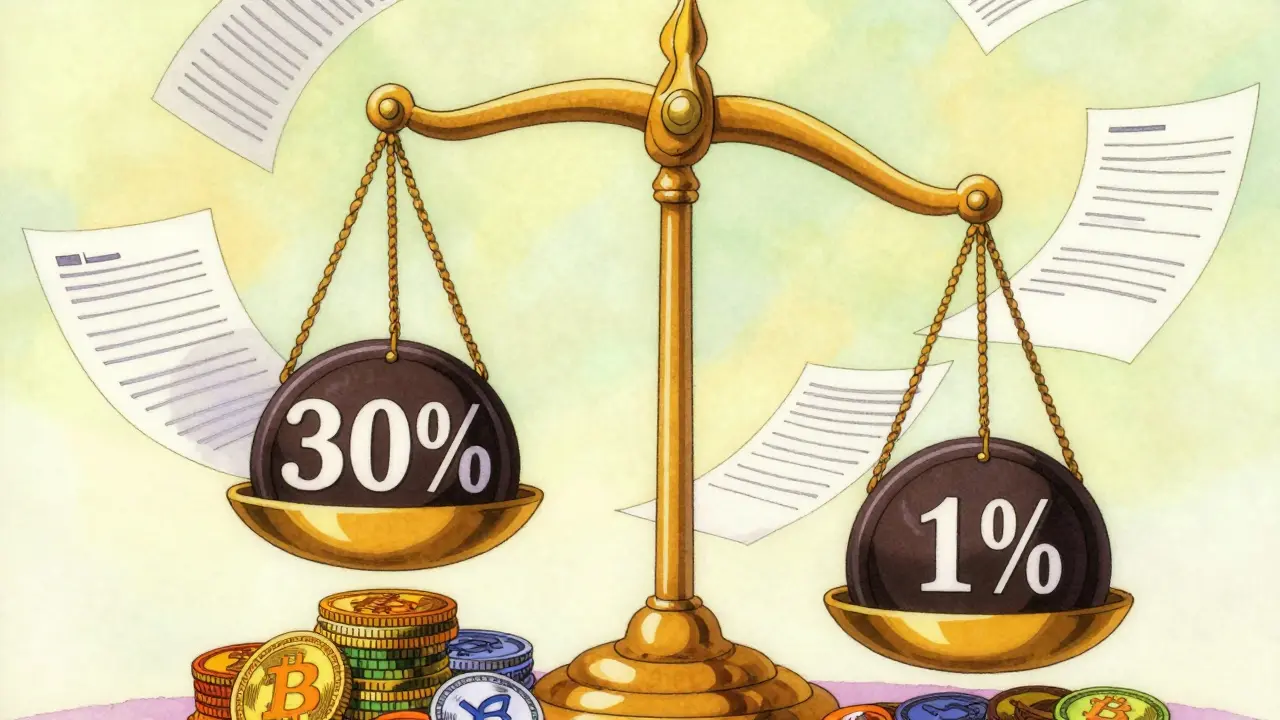
India doesn’t ban ownership, but it imposes a crushing tax burden. A flat 30% tax on all crypto gains, combined with a 1% Tax Deducted at Source (TDS) on every transaction, creates a hostile environment for traders. While this isn’t criminal prosecution in the traditional sense, it is a form of enforcement through regulation. The Supreme Court overturned a banking ban in 2020, allowing banks to service crypto businesses, but the heavy taxation serves as a powerful disincentive. For many users, the bureaucratic nightmare and financial drain feel like punishment enough, even if they aren’t facing a judge.
Selective Enforcement: Targeting Criminals, Not Users
In contrast to the total bans, major economies like the United States and parts of Europe focus on selective enforcement. They target bad actors, not average investors. This distinction is crucial for understanding your personal risk.
The United States exemplifies this approach. In September 2024, the Office of Foreign Assets Control (OFAC) sanctioned the Russia-based exchange Cryptex and its operator Sergey Sergeevich Ivanov. Why? Because Cryptex laundered over $5.88 billion linked to ransomware and darknet markets. The U.S. State Department offered a $10 million reward for Ivanov’s arrest. This shows serious commitment to catching major criminals. However, for the average American buying Bitcoin on Coinbase, the risk of prosecution is minimal. The Trump administration’s crypto-friendly stance in 2025-2026 further reduced pressure on individual users, prioritizing innovation over blanket restrictions.
Europe is taking a similar but more structured path. The new Anti-Money Laundering Authority (AMLA), launched in July 2025, is scaling up rapidly, aiming for over 400 employees by 2028. The EU’s Fifth Anti-Money Laundering Directive (AMLD5) forces exchanges to implement strict customer due diligence. This means better protection against fraud and higher chances of fund recovery if something goes wrong. European enforcement focuses on institutional compliance rather than hunting down retail users.
Regulatory Clarity: Business-Friendly Environments
Some countries have moved beyond ambiguity to create clear, business-friendly frameworks. These jurisdictions offer low prosecution risk and high legal certainty.
Singapore operates under the Payment Services Act (2020). The Monetary Authority of Singapore (MAS) published a stablecoin framework in August 2023 requiring full reserve backing. This isn’t about punishment; it’s about ensuring stability. Singapore focuses on regulatory compliance, making it a hub for legitimate crypto businesses. You won’t be prosecuted here for using crypto, provided you follow the rules.
South Korea introduced the "Act on Protection of Virtual Asset Users" (VAUPA) in July 2024. This law requires exchanges to segregate client assets, maintain insurance, and report suspicious activity. It’s designed to protect users, not imprison them. Exchanges enhanced their compliance systems in anticipation of VAUPA, showing a cooperative rather than adversarial relationship between regulators and the industry.
Brazil passed a national crypto law in 2023, with implementation phases rolling out through 2024-2025. Like Singapore and South Korea, Brazil emphasizes building a regulatory framework rather than enforcing through prosecution. This provides clarity for users and businesses alike.

The Friendly Havens: Minimal Risk Jurisdictions
At the opposite end of the spectrum are countries that welcome crypto with open arms. Here, prosecution risk is virtually non-existent for legitimate users.
Portugal has positioned itself as one of Europe’s most crypto-friendly countries in 2025. Despite potential future changes, the current environment offers minimal prosecution risk. If you’re looking for a jurisdiction where you can hold and trade crypto without fear of legal repercussions, Portugal is a top choice.
Ecuador maintains a cautious stance. The Central Bank doesn’t recognize crypto as legal tender and discourages payments, launching its own state-backed digital currency, the Sistema de Dinero Electrónico. However, this is regulatory discouragement, not active prosecution. You won’t go to jail for holding Bitcoin in Ecuador, but you won’t get official support either.
| Country | Enforcement Style | Risk Level for Users | Key Action |
|---|---|---|---|
| China | Total Ban | Extreme | Active prosecution of users/miners |
| Algeria | Total Ban | Extreme | Criminal penalties for all activities |
| Bangladesh | Total Ban | High | Fines and imprisonment |
| India | Heavy Taxation | Moderate | 30% gain tax + 1% TDS |
| USA | Selective Enforcement | Low | Targeting major criminals/exchanges |
| Singapore | Regulatory Framework | Low | Compliance-focused (Payment Services Act) |
| Portugal | Crypto-Friendly | Minimal | No prosecution for legitimate users |
Global Cooperation and the Future of Enforcement
One trend that cannot be ignored is the strengthening of international cooperation. Sanctioned jurisdictions received $15.8 billion in cryptocurrency in 2024, accounting for 39% of all illicit transactions. This massive flow of dirty money has forced countries to work together.
Operation Endgame, a coordinated effort between U.S. and European authorities, resulted in the seizure of domains and €7 million in funds linked to cybercrime. Dutch law enforcement, supported by Chainalysis and Tether, played a key role. This shows that blockchain tracking tools are becoming increasingly effective. Platforms like Tether moving offshore to avoid oversight create regulatory arbitrage opportunities, but they also draw more scrutiny.
For the average user, this means that while local laws matter, global networks are closing in on anonymity. If you’re involved in anything illegal, borders matter less than before. But if you’re just investing or using crypto for remittances, you’re largely safe in democratic nations.
Is it illegal to own crypto in China?
Yes. China has banned all domestic crypto trading and mining since 2017. Authorities actively prosecute individuals engaged in these activities, making it extremely risky to own or trade crypto there.
Will I go to jail for trading crypto in India?
No, ownership is not illegal. However, India imposes a 30% tax on gains and a 1% TDS on transactions. Failure to pay these taxes can lead to legal issues, but trading itself does not result in criminal prosecution.
How does the US enforce crypto laws?
The US focuses on selective enforcement, targeting major criminal enterprises, money laundering, and unregistered exchanges. Average users who comply with tax laws face minimal prosecution risk.
Which countries are most crypto-friendly in 2026?
Portugal, Singapore, and Switzerland are considered highly crypto-friendly. They offer clear regulatory frameworks and minimal prosecution risk for legitimate users.
What is Operation Endgame?
Operation Endgame is an international enforcement effort between US and European authorities to dismantle financial enablers of cybercrime. It resulted in significant seizures of crypto assets and demonstrates growing global cooperation.
Does the EU prosecute individual crypto users?
Generally, no. The EU focuses on institutional compliance through directives like AMLD5 and the new AMLA authority. Enforcement targets exchanges and custodians to ensure customer protection and prevent money laundering.
Is crypto legal in Bangladesh?
No. Bangladesh strictly prohibits cryptocurrency use and trading under anti-money laundering laws. Authorities actively enforce this ban with fines and criminal prosecution.
What should I do if I live in a country with a crypto ban?
If you live in a country with a total ban like China or Algeria, you should avoid engaging in crypto activities entirely. The risk of prosecution and asset seizure is extremely high. Consult local legal experts for specific advice.