
DAO Voting Power Calculator
Calculate Your Voting Power
How much influence do your tokens give you in DAO decision-making?
Enter your token amount to see your voting power
Voting Power Concentration
In most DAOs, voting power is highly concentrated:
Top 10 holders control 25% of voting power
Top 1% of holders control 62% of voting power
This means small holders have minimal influence in traditional one-token-one-vote systems.
When you hear about a DAO making a big decision-like changing its fee structure, spending millions from its treasury, or launching a new product-it’s easy to assume a team of developers or executives pulled the strings. But that’s not how it works. In a true DAO, governance tokens are the voting ballots. Every time a proposal goes live, it’s not a CEO who decides. It’s the people holding those tokens.
Think of governance tokens like shares in a company, but without the dividends. You don’t get paid for holding them. You don’t get ownership of the code. What you get is a vote. And that vote is what keeps the whole system decentralized. Without them, DAOs would just be open-source projects with a fancy website. With them, they become self-governing communities.
How Governance Tokens Actually Work
At its core, governance tokens operate on a simple principle: one token, one vote. If you hold 5,000 UNI tokens in the Uniswap DAO, you have 5,000 votes. If you hold 10, you have 10. That’s it. The math is straightforward, and the votes are recorded on the blockchain-public, permanent, and impossible to alter.
This system was first put to real-world use by MakerDAO in late 2017 with its MKR token. Back then, the idea was radical: let token holders vote on interest rates, collateral types, and emergency shutdowns without a central authority. Today, that model powers over 10,000 DAOs managing nearly $23 billion in assets. Projects like Aave, Compound, and Curve all use the same basic framework.
But here’s the catch: voting doesn’t happen on the main blockchain. Most DAOs use off-chain tools like Snapshot.org to collect votes. Why? Because signing a transaction on Ethereum costs money-sometimes tens of dollars. Snapshot lets you vote for free by signing a message with your wallet. The results are then submitted on-chain only if the proposal passes. This keeps participation low-cost and scalable.
The Problem With One Token, One Vote
It sounds fair. But in practice, it’s not. The biggest issue? Wealth concentration.
In Uniswap’s DAO, the top 10 token holders control nearly 25% of all voting power. That means a handful of wallets can outvote thousands of small holders. In 2022, a single wallet moved 1.2 million COMP tokens to vote on a proposal that changed how rewards were distributed. The proposal passed. The community was furious. But they didn’t have enough tokens to block it.
This isn’t a bug-it’s a feature of token-based voting. The system assumes that people who have more skin in the game (i.e., more tokens) have more to lose if the protocol fails. But it also creates plutocracy: rule by the wealthy. Vitalik Buterin called this out in 2022, warning that pure token voting turns DAOs into “financial oligarchies.”
And it’s not just about power. It’s about access. Most people don’t hold enough tokens to make a difference. A 2023 survey of 1,245 BanklessDAO members found that 78% had never voted on treasury proposals because they didn’t understand them-or felt their vote didn’t matter.
Alternatives to Token-Based Voting
Some DAOs are trying to fix this. One approach is quadratic voting. Instead of one token = one vote, you pay more for each additional vote. One vote costs 1 token. Two votes cost 4 tokens. Three votes cost 9 tokens. This makes it expensive for whales to dominate, but still allows passionate small holders to have a stronger voice.
Gitcoin Grants, a funding platform for open-source projects, switched to quadratic voting in 2021. After the change, the top 10 voters lost 73% of their influence. Small contributors started winning funding rounds they never could before.
Another model is reputation-based voting. Here, your voting power isn’t tied to how many tokens you own, but to how much you’ve contributed. Did you write code? Translate docs? Moderate forums? You earn reputation points. This system is used by DAOs built on Colony and DAOstack. But it’s hard to measure fairly. Some users found ways to “farm” reputation by doing low-effort tasks just to gain voting power.
Then there’s delegated voting. If you don’t have time to research every proposal, you can assign your vote to someone else-a delegate. Uniswap has over 1,200 delegates. Nearly 60% of all voting power is delegated. That means most people aren’t voting directly. They’re trusting others to act in their interest. It’s like electing a representative, but on the blockchain.
What Happens When a Proposal Passes?
Once a vote closes and the majority approves a proposal, the smart contract executes it automatically. No middleman. No approval chain. If the DAO votes to send $2 million to a developer grant, the funds move. If it votes to change the protocol’s fee structure, the code updates.
This is where the magic happens. The system is trustless. You don’t need to trust a CEO. You don’t need to trust a board. You just need to trust the code-and the majority of token holders.
But it’s not perfect. In 2020, during the ‘Black Thursday’ crash, MakerDAO’s emergency committee (a multisig group of 11 people) temporarily froze collateral auctions. The community had voted to allow it, but many felt it was a backdoor to centralization. That’s the tension: autonomy vs. speed. Sometimes, a slow, democratic process can’t respond fast enough to a crisis.
Why People Don’t Vote
Even with all these tools, voter turnout in DAOs is abysmal. On average, only 3.2% of eligible token holders vote on proposals. That’s lower than local elections in many democracies.
Why? Three reasons:
- Complexity. Proposals are written in dense legal and technical language. You need to understand smart contracts, tokenomics, and risk parameters just to vote.
- Time. One Reddit user said they spent 15-20 hours a week just researching proposals across four DAOs.
- Disengagement. If you only hold 100 tokens, you know your vote won’t change anything. Why bother?
Some DAOs are fighting this. BanklessDAO created sub-DAOs focused on specific areas-marketing, education, legal-so members could vote on things they cared about. Participation in those sub-DAOs jumped to 40%. When people feel their vote matters in a small group, they show up.

The Risks Are Real
Governance tokens aren’t just about democracy. They’re about security. And they’re under attack.
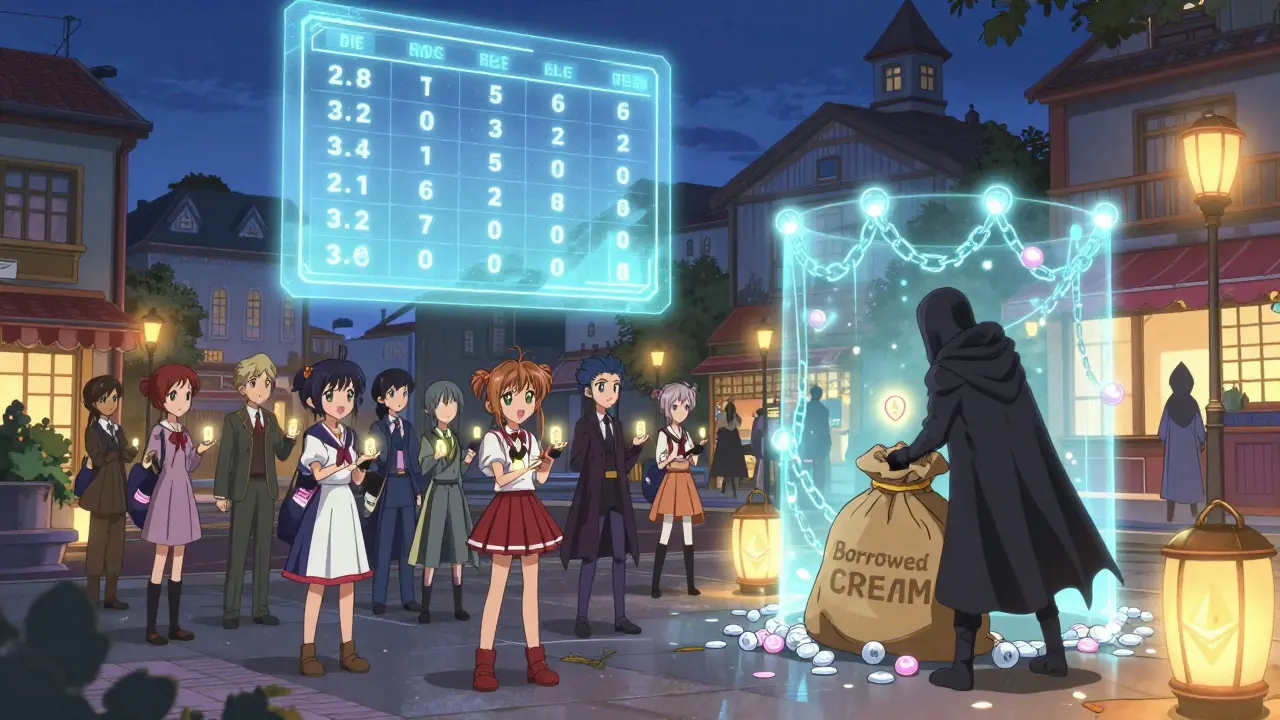
In 2021, an attacker borrowed 120,000 CREAM tokens from a lending protocol, voted to redirect the DAO’s treasury to their wallet, and walked away with $13 million. The DAO had no safeguards. No time locks. No quorum requirements. It was like letting someone rent a key to your house and then trusting them not to steal your stuff.
Since then, governance attacks have increased by 217%. In 2023 alone, they cost projects over $127 million. The fix? Time-locked voting power. If you want to vote on a proposal, you have to hold your tokens for at least 7 days. No borrowing. No short-term manipulation.
Also, many DAOs now require a minimum token threshold to submit a proposal. MakerDAO, for example, requires 1,000 MKR to even start a vote. That stops spam. But it also makes it harder for new members to get heard.
Where Is This All Headed?
The future of DAO governance isn’t about picking one system. It’s about mixing them.
Aave now lets you assign different delegates for different types of proposals-like one for treasury votes, another for protocol upgrades. Optimism launched its “Citizen House,” a quadratic voting system that funds public goods like documentation and education. And Vitalik Buterin’s new idea-conviction voting-suggests that your vote grows stronger the longer you support a proposal. If you back something for 30 days, your vote counts more than if you just jumped in at the last minute.
By 2025, 61% of DAOs plan to use hybrid systems combining tokens, reputation, and time-based weighting. The goal isn’t perfect equality. It’s balance. Enough power for those who’ve invested, but enough protection for the community.
Regulators are watching too. In 2023, the SEC signaled that governance tokens could be classified as securities if they’re sold with the expectation of profit. That could change how they’re distributed. But for now, the experiment continues.
DAOs aren’t governments. They’re experiments in collective ownership. And governance tokens are their voting machines. They’re not perfect. They’re messy. But they’re the closest thing we have to truly decentralized decision-making.
If you hold a governance token, you’re not just a holder. You’re a citizen. And your vote-no matter how small-is what keeps the system alive.
What exactly is a governance token?
A governance token is a cryptocurrency that gives its holder the right to vote on decisions within a Decentralized Autonomous Organization (DAO). These decisions can include changing protocol rules, allocating treasury funds, or upgrading smart contracts. Unlike other tokens, governance tokens don’t typically pay dividends or represent ownership-they represent voting power. Examples include UNI (Uniswap), COMP (Compound), and MKR (MakerDAO).
Do you need to hold a lot of tokens to have influence?
Yes, in most DAOs, voting power is directly tied to token holdings. The top 10 holders in major DAOs like Uniswap often control over 20% of the total voting power. This means small holders-those with under 1,000 tokens-have very little influence unless they delegate their vote or join a sub-DAO. Some DAOs are experimenting with quadratic voting to reduce this imbalance.
Can you vote without spending gas?
Yes. Most DAOs use off-chain voting platforms like Snapshot.org, which let you sign a message with your wallet to cast a vote-no Ethereum transaction needed. This means voting is free and fast. Once a proposal passes, the result is submitted on-chain by a trusted party or multisig, and the smart contract executes automatically.
What’s the difference between governance tokens and regular crypto tokens?
Regular crypto tokens, like ETH or USDC, are used for payments, staking, or as stores of value. Governance tokens are specifically designed for decision-making. You don’t use them to buy things. You use them to vote. Holding a governance token doesn’t guarantee financial returns-it gives you a say in how the project evolves. Some tokens, like UNI, serve both purposes, but their governance function is what makes them unique.
Why do so few people vote in DAOs?
Voter turnout is low because proposals are often complex, time-consuming to understand, and feel irrelevant to small holders. Many people don’t believe their vote matters if they hold only a few tokens. Others are overwhelmed by notifications-some users report getting 20+ voting alerts per week. DAOs are trying to fix this by creating sub-DAOs, simplifying language, and introducing delegation systems.
Are governance tokens regulated?
Regulators are still figuring this out. In 2023, the SEC took action against Uniswap Labs, suggesting that governance tokens could be classified as securities if they’re sold with the expectation of profit or if they grant economic rights beyond voting. This creates legal uncertainty. Many DAOs now avoid selling tokens directly and instead distribute them through community rewards or liquidity mining to reduce regulatory risk.
Can a DAO be hacked through its governance system?
Yes. This is called a governance attack. In 2021, an attacker borrowed a large amount of CREAM tokens, voted to steal the DAO’s treasury, and withdrew the funds before the loan was repaid. Since then, DAOs have added safeguards like time-locked voting power (you must hold tokens for 7+ days to vote) and higher quorum requirements. But the risk remains if a proposal lacks proper checks.
What’s the future of DAO voting?
The future is hybrid. Most DAOs will combine token-based voting with reputation systems, quadratic voting, and time-based weightings. Projects like Optimism and Aave are already testing these models. Conviction voting-where your vote grows stronger the longer you support a proposal-is gaining traction. The goal is to reduce whale dominance while keeping participation high. Governance won’t be perfect, but it’s getting smarter.