
Japan Crypto Exchange Licensing Cost Calculator
Estimate Your Japan Crypto Exchange Costs
Calculate estimated costs to obtain a Japan crypto exchange license based on current regulatory requirements
Japan doesn’t just regulate cryptocurrency exchanges-it redefines what compliance means in the digital asset world. If you’re trying to operate a crypto exchange in Japan, or even just use one as a trader, you’re dealing with one of the strictest, most detailed systems on the planet. It’s not about blocking innovation. It’s about making sure when something goes wrong, your money is still safe.
Why Japan’s Rules Are Different
Most countries treat crypto like a wild west-some ban it, some ignore it, others try to catch up after hacks. Japan did something else. In 2017, it made virtual currency legal property under the Payment Services Act. That wasn’t just a technical change. It meant exchanges had to treat crypto like cash, not just data. That shift forced them to build real financial controls, not just tech platforms. By September 2025, Japan took another major step: moving crypto oversight from the Payment Services Act to the Financial Instruments and Exchange Act (FIEA). This isn’t just paperwork. It means crypto assets are now treated the same way as stocks, bonds, and other securities when they’re used for investment. Tokens that behave like investments? They get full securities rules. Payment tokens? Still regulated, but under lighter rules. This split is unique. The U.S. still argues over whether Bitcoin is a commodity or security. Japan just made the call.Who Can Operate? The Licensing Bar
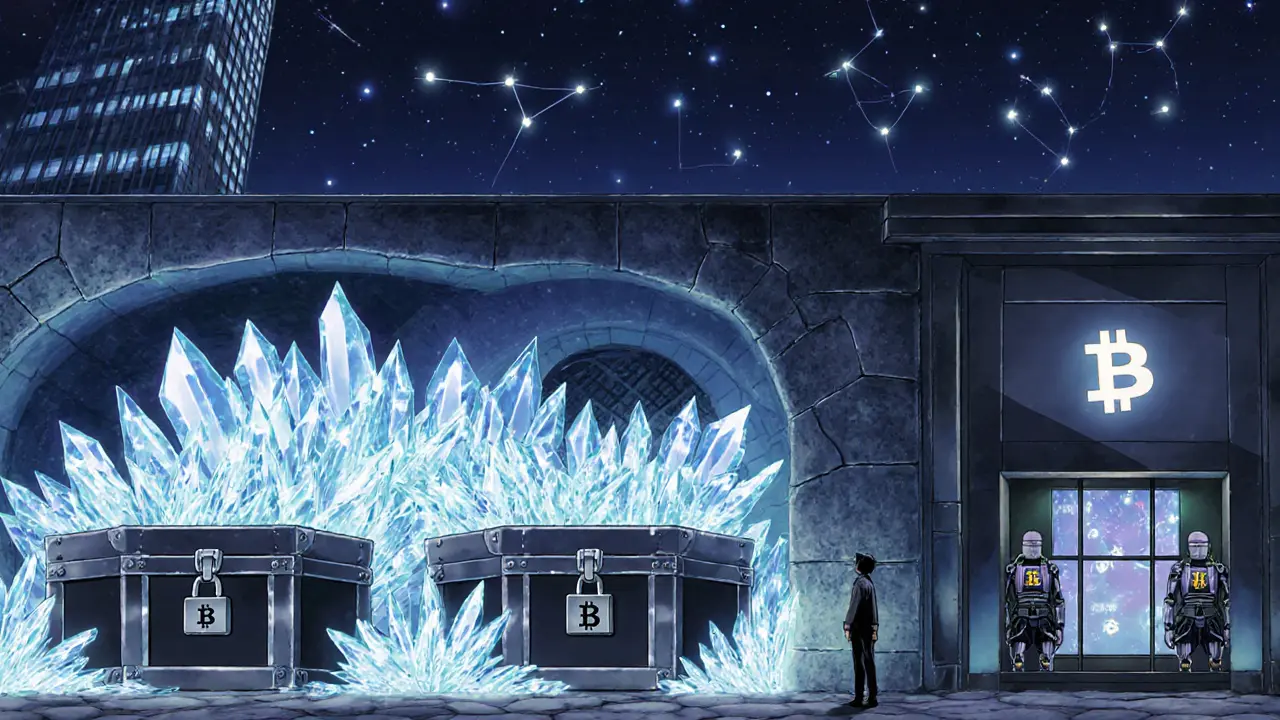
You can’t just set up a website and start taking deposits. To get licensed in Japan, you must be a kabushiki-kaisha-a Japanese joint-stock company. That means you need a physical office in Japan, a resident manager who can be held personally liable, and a corporate structure that meets Japanese corporate law. No offshore shell companies. No anonymous owners. Capital requirements are brutal. You need at least 10 million yen (about $68,000 USD) in paid-in capital, plus positive net assets. Most serious applicants spend $500,000 to $1 million just to get through the process. Why? Because the Financial Services Agency (FSA) doesn’t want another Coincheck. In 2018, that exchange lost $534 million in NEM tokens because they stored most assets online. After that, Japan made cold storage mandatory. Now, every licensed exchange must keep at least 95% of user funds in offline wallets. No exceptions. The remaining 5%? That’s for daily withdrawals. Even then, those hot wallets need multi-signature access and real-time monitoring. Security isn’t optional. It’s baked into the license.The Hidden Gatekeeper: JVCEA
The FSA sets the minimums. But the real power lies with the Japan Virtual Currency Exchange Association (JVCEA). Eighteen of the 21 licensed exchanges are members. And JVCEA doesn’t just meet once a year. It actively blocks new tokens. In Q2 2025 alone, JVCEA’s 17-member Token Listing Committee reviewed 147 applications. Only 28% got approved. That’s not because they’re anti-innovation. It’s because they’ve seen too many scams. Meme coins, fake projects, tokens with no utility-they get rejected. In April 2025, they even froze all new listings for 30 days after a wave of fraudulent tokens appeared. Compare that to Singapore, where exchanges self-certify listings. Or the U.S., where the SEC chases individual tokens after they’ve already crashed. Japan stops bad tokens before they reach users. The trade-off? You won’t find the latest trending altcoin on a Japanese exchange until months after it’s launched elsewhere. Retail traders complain. But the data shows fewer losses.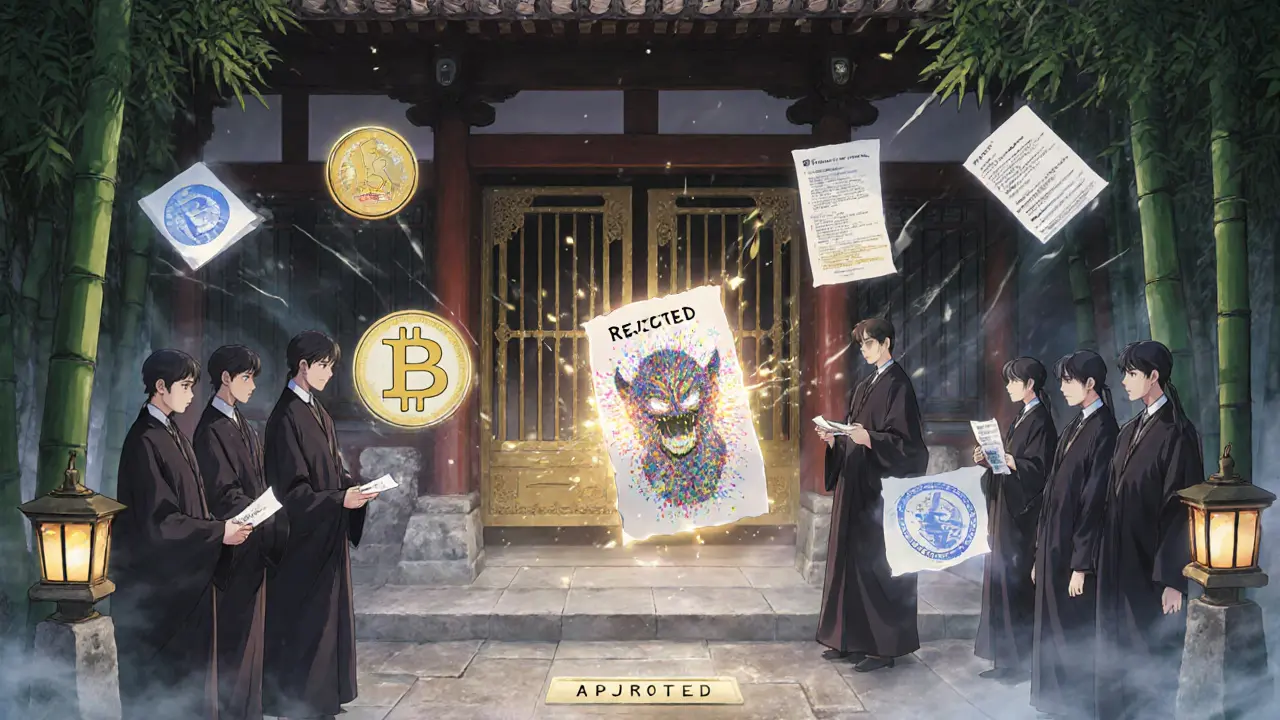
What Traders Can’t Do (And Why)
If you’re used to trading with 10x or 50x leverage, Japan’s rules will feel like a wall. Since 2023, the maximum leverage allowed on licensed exchanges is 2x. That’s lower than most emerging markets. Dubai allows up to 100x. Why the restriction? Because Japan’s regulators saw how leverage turned small losses into mass bankruptcies during the 2022 crypto crash. CryptoCompare’s 2025 analysis estimates this rule caused a 15% drop in active day traders on Japanese platforms. But retail users? They’re happier. The FSA’s 2025 Consumer Confidence Report found 87% of users feel “very” or “somewhat” secure using licensed exchanges. That’s 24 percentage points higher than in unregulated markets. The 2x limit isn’t about stopping trading. It’s about stopping people from losing everything in one bad bet. For long-term holders, it’s not a problem. For active traders? It’s a dealbreaker. That’s why some Japanese traders still use offshore platforms-even though those aren’t protected by Japanese law.The Cost of Compliance
Getting licensed takes 18 to 24 months. That’s not a typo. The process includes a six-month shadow operation where the exchange must simulate real trades without errors. Every system-wallets, KYC, transaction monitoring-must be tested under real-world conditions. Compliance costs are massive. Exchanges spend 18-24% of their revenue on legal, audit, and security teams. That’s double what Singaporean exchanges spend. Why? Because Japan demands:- DDoS protection capable of handling 1 Tbps attacks
- AML systems that process 10,000+ transactions per second
- Third-party audits every six months
- 24/7 security teams ready to respond within 15 minutes of any incident
- Smart contract audits from FSA-approved Japanese firms like NCC Group
Who’s Winning? Who’s Losing?
The big winners are users. Since the 2018 Coincheck hack, there hasn’t been a single major theft from an FSA-licensed exchange. Bitbank, DMM Bitcoin, GMO Coin-all kept user funds safe during the March 2025 security incident that took down several offshore platforms. Reddit user TokyoTrader88 put it simply: “My 2.3 BTC stayed safe. On other exchanges, people lost everything.” The losers? Startups and traders looking for fast growth. The cost and time to enter Japan are too high for small teams. And the token listing delays mean Japanese users miss out on early opportunities. Professional traders say the 2x leverage cap kills volatility-based strategies. Some even call Japan’s system “overregulated.” But here’s the twist: Japan’s model is attracting institutional investors. The FSA’s move to FIEA means pension funds, asset managers, and even banks might soon enter the market. Mitsubishi UFJ Financial Group is reportedly exploring a license under the new ECISB framework. If that happens, Japan could become the first country where traditional finance and crypto fully merge under one regulatory roof.What’s Next? The 2026 Shift
By March 2026, Japan plans to fully complete its transition to the FIEA. The new Electronic Payment Instrument and Crypto-asset Intermediary Service Business (ECISB) framework will require all exchanges to notify the FSA before launching new services. This isn’t about control-it’s about transparency. The FSA is also reviewing whether banks should be allowed to hold Bitcoin as an investment. If approved, banks would need 30% capital buffers against crypto (vs. 8% for stocks) and pass stress tests for 80% price drops. That’s not a green light. It’s a warning: if you’re going to play in crypto, you need to be ready for the worst. Japan’s system isn’t perfect. It’s slow. It’s expensive. It’s restrictive. But it’s working. No major exchange hack since 2018. 12.1 million users. 87% trust. That’s not luck. That’s design.How many crypto exchanges are currently licensed in Japan?
As of June 2025, 21 crypto exchanges hold active licenses from Japan’s Financial Services Agency (FSA). Since 2017, 17 exchanges have had their licenses canceled for failing to meet compliance standards, including issues with security, AML procedures, or capital requirements.
Can I use an offshore crypto exchange if I live in Japan?
Yes, you can technically use offshore exchanges, but you lose all legal protections under Japanese law. Licensed exchanges are required to hold user funds in cold wallets, provide insurance against theft, and follow strict KYC rules. Offshore platforms aren’t bound by these rules. If they get hacked or shut down, Japanese regulators can’t help you recover your assets.
Why does Japan require 95% of crypto to be stored offline?
This rule was introduced after the 2018 Coincheck hack, where $534 million in NEM tokens were stolen because they were stored online. Japan’s regulators decided that no exchange should be allowed to keep large amounts of user funds in hot wallets. The 95% cold storage rule ensures that even if an exchange is hacked, the vast majority of user assets remain safe and inaccessible to attackers.
Why can’t I trade with high leverage on Japanese exchanges?
Japan capped leverage at 2x in 2023 after seeing how high-leverage trading led to mass liquidations during the 2022 crypto crash. Many retail traders lost everything in single events. The FSA decided that protecting users from catastrophic losses was more important than offering high-risk trading options. This rule has reduced day trading activity by about 15%, but it has also drastically lowered the number of user complaints and bankruptcies.
How long does it take to get a crypto exchange license in Japan?
The average process takes 18 to 24 months. This includes submitting detailed documentation, undergoing a six-month shadow operation where the exchange must simulate real trades without errors, passing third-party audits, and securing approval from both the FSA and the JVCEA. The total cost typically ranges from $500,000 to $1 million, making it one of the most expensive licensing processes in the world.
Are new tokens approved quickly on Japanese exchanges?
No. The Japan Virtual Currency Exchange Association (JVCEA) reviews every token listing application. In Q2 2025, 72% of the 147 applications were rejected. The committee requires whitepapers, smart contract audits from Japanese-certified firms, and proof of market demand. This process can take months, meaning new tokens often appear on Japanese exchanges 3-6 months after global launches.
Will Japanese banks start offering crypto services soon?
Possibly. The FSA is reviewing rules to allow banks to hold Bitcoin for investment purposes, but with strict conditions: a 30% capital buffer against crypto holdings and mandatory stress tests for 80% price drops. Mitsubishi UFJ Financial Group and other megabanks are exploring licensing under the new ECISB framework. If approved, this could bring billions in institutional capital into Japan’s crypto market by 2027.