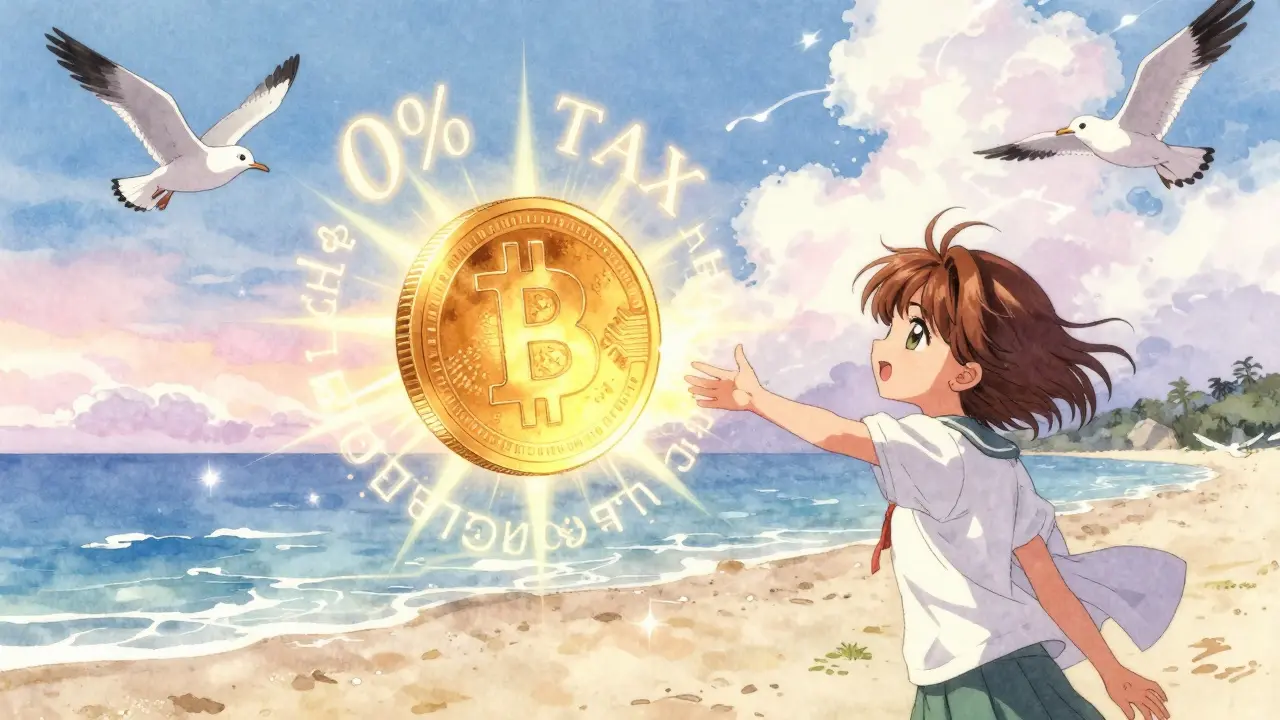
El Salvador is the only country in the world where you can buy, sell, or trade Bitcoin without paying a single cent in capital gains tax. That’s not a rumor. It’s the law. Since September 2021, when Bitcoin became legal tender, the government made a bold move: Bitcoin profits are completely tax-free. Whether you’re a local resident or a foreign investor, if you hold or trade Bitcoin in El Salvador, the government won’t take a cut of your gains.
How the Tax Exemption Works
The rule is simple: no matter how much your Bitcoin rises in value, you don’t owe taxes when you sell it. This applies to individuals, businesses, and foreign investors alike. Unlike most countries that treat Bitcoin like property and tax you every time you trade it for goods, services, or other currencies, El Salvador treats Bitcoin as money. If you buy Bitcoin at $30,000 and sell it at $60,000, your $30,000 profit stays entirely in your pocket. This exemption isn’t just for locals. Foreigners who invest at least ₿3 (three Bitcoin) in the country get the same benefit. That’s a major draw for international investors looking to avoid the 20-40% capital gains taxes common in the U.S., Canada, Australia, and much of Europe. The law doesn’t just cover personal trades. It extends to businesses too. Crypto exchanges, wallet providers, and payment processors operating in El Salvador don’t pay corporate income tax, service transfer tax, or municipal taxes on Bitcoin-related activities. The National Commission of Digital Assets (CNAD) handles licensing and oversight, but not taxation.Two Types of Crypto Licenses
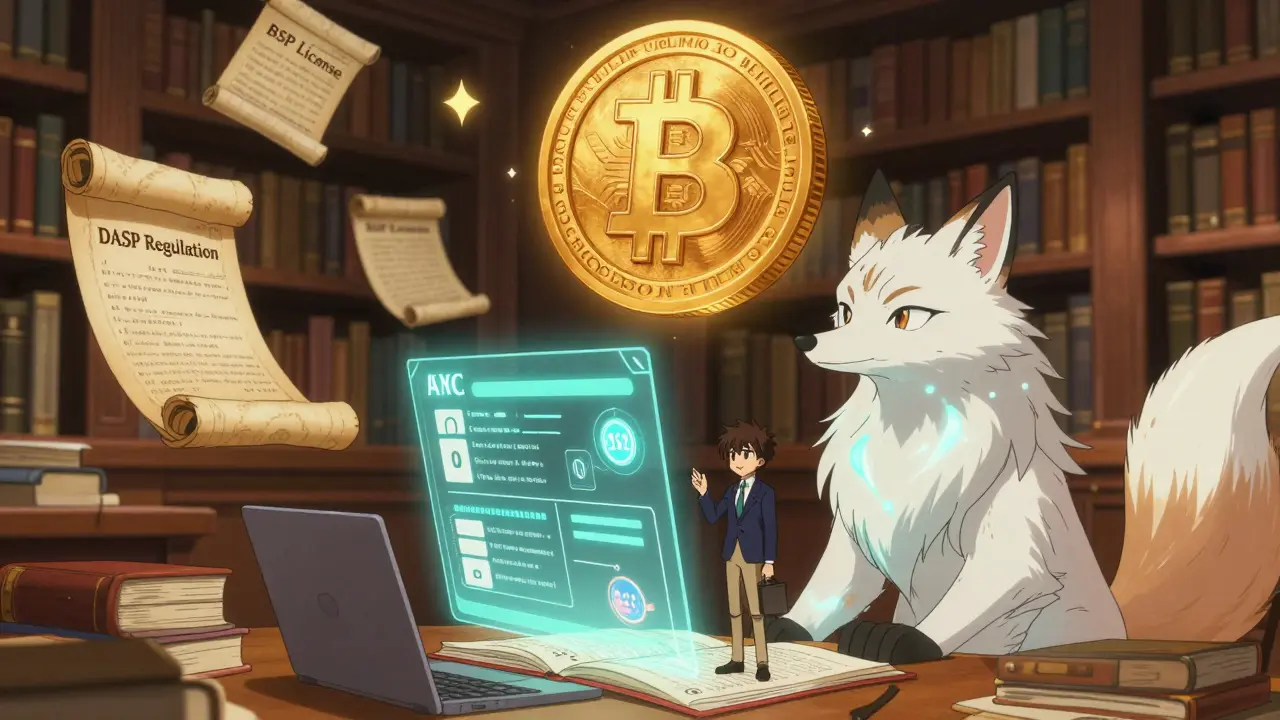
If you want to run a crypto business in El Salvador, you need a license from CNAD. There are two types:- Bitcoin Service Provider (BSP) - For companies that deal only with Bitcoin. This includes exchanges, custodial wallets, payment gateways, and ATMs.
- Digital Asset Service Provider (DASP) - For businesses handling other digital assets like Ethereum, NFTs, or tokens.
What Changed After the IMF Deal
In December 2024, El Salvador agreed to a $1.4 billion loan from the International Monetary Fund (IMF). The deal came with conditions. The government had to scale back its Bitcoin program. By February 2025, new laws were passed that:- Stopped the government from buying more Bitcoin
- Removed the requirement for businesses to accept Bitcoin as payment
- Ended tax payments in Bitcoin
- Phased out the state-run Chivo wallet

Who’s Really Using Bitcoin?
Despite the tax break, most Salvadorans aren’t using Bitcoin for daily payments. A 2024 survey by the Universidad Centroamericana showed only 8.1% of the population used Bitcoin regularly - down from 25.7% in 2021. People didn’t trust the Chivo wallet. They didn’t understand how to use it. Many didn’t even know they could avoid taxes on gains. The government’s own Bitcoin investments tell a different story. By March 2024, El Salvador held over 2,300 Bitcoin bought at an average price of around $43,000. When Bitcoin hit $69,000, those holdings were worth over $50 million more than what the government paid. That’s a 50% profit - and it’s all tax-free. The problem? The cost of launching the whole program - marketing, hardware, education, Chivo wallet development - was over $100 million. The country hasn’t broken even yet.How El Salvador Compares to Other Crypto Tax Havens
El Salvador isn’t the only place with zero crypto taxes, but it’s the only one that made Bitcoin legal tender. Here’s how it stacks up:| Country | Capital Gains Tax on Crypto | Corporate Tax on Crypto Businesses | Legal Tender Status |
|---|---|---|---|
| El Salvador | 0% | 0% (for BSP/DASP under LEAD) | Yes (Bitcoin only) |
| Cayman Islands | 0% | 0% | No |
| UAE | 0% | 0% | No |
| Germany | 0% after 12 months | Standard corporate tax | No |
| Portugal | 0% for individuals (long-term) | Standard corporate tax | No |
What Businesses Need to Do
Even though you don’t pay taxes, you still have to follow the rules. If you’re running a crypto business in El Salvador, you must:- Get licensed by CNAD
- Verify every customer (KYC)
- Report suspicious transactions (AML)
- Keep accurate financial records
- File annual reports with CNAD and the Ministry of Finance
- Pay VAT on non-Bitcoin services (if applicable)
Bitcoin City: The Ultimate Tax-Free Zone
El Salvador’s next big move is Bitcoin City - a planned metropolis built around a volcano, powered by geothermal energy, and designed to be completely tax-free. The vision: no income tax, no property tax, no sales tax, no import duties. Businesses that set up shop there won’t pay taxes on anything - not Bitcoin, not fiat, not profits, not dividends. It’s still in early planning stages, but the government has already started land surveys and infrastructure work. If it happens, Bitcoin City could become the world’s first fully crypto-native economy. Investors from around the globe are already watching.Is It Sustainable?
El Salvador’s Bitcoin experiment is controversial. Critics say it’s risky, untested, and politically driven. Supporters say it’s the only way a small, cash-dependent economy can leapfrog into the digital future. The IMF deal showed that even powerful international institutions aren’t willing to force El Salvador to abandon its tax exemption. That’s a strong signal. The government knows that if it removes the tax break, it loses its main advantage. Foreign capital won’t come. Businesses won’t relocate. The whole strategy falls apart. For now, the tax exemption stands. And as long as Bitcoin remains legal tender, it likely will stay that way.What This Means for You
If you’re an investor, freelancer, or business owner looking for a place to hold Bitcoin without paying taxes, El Salvador is still the only country that offers a full, legal, government-backed exemption. You don’t need to move there permanently. You don’t even need to be a citizen. Just invest ₿3 or more, set up a local business or wallet, and you’re covered. The risk? The government might change other parts of the law. But the tax exemption? That’s the one thing they won’t touch.Is Bitcoin really tax-free in El Salvador?
Yes. El Salvador is the only country in the world that legally exempts all Bitcoin transactions from capital gains tax. This applies to individuals and businesses, whether you’re a local or a foreign investor. The law was passed in 2021 and remains in effect as of 2026, even after IMF-related reforms.
Do I need to live in El Salvador to get the tax break?
No. You don’t need to be a resident or citizen. Foreign investors who put at least ₿3 (three Bitcoin) into the country qualify for the same tax exemption. You can hold Bitcoin in a local wallet, trade through a licensed exchange, or even start a business without moving there.
Does the tax exemption apply to other cryptocurrencies like Ethereum?
No. The capital gains tax exemption only applies to Bitcoin, because it’s the only cryptocurrency with legal tender status in El Salvador. Other digital assets like Ethereum or Solana are regulated under the DASP license and may be subject to different rules - though they still benefit from corporate tax exemptions for businesses.
Can I pay my taxes in Bitcoin in El Salvador?
No. As of February 2025, the government stopped accepting Bitcoin for tax payments. Taxes must now be paid in U.S. dollars, which is the official currency alongside Bitcoin. This change was part of the IMF agreement, but it doesn’t affect the capital gains tax exemption on Bitcoin trades.
What happens if I sell Bitcoin and make a profit in El Salvador?
You keep the full profit. There is no capital gains tax, no reporting requirement to the tax authority for personal trades, and no withholding. You only need to comply with AML/KYC rules if you’re using a licensed service provider. Your profit stays yours - no questions asked.