
North Macedonia Crypto Tax Calculator
Calculate Your Potential Crypto Tax Liability
Based on the current regulatory uncertainty in North Macedonia, this tool provides estimates for capital gains tax on your crypto transactions. Note: Tax rules are not yet finalized as of October 2025.
Important Note: North Macedonia has not yet established clear tax rules for cryptocurrency transactions. The calculation above uses an estimated 15% rate based on current EU standards, but actual tax rates may vary significantly once regulations are finalized.
North Macedonia isn’t banning cryptocurrency outright-but it’s not letting you trade freely either. As of October 2025, the country operates in a legal gray zone: crypto isn’t illegal, but it’s not officially recognized either. This half-measure has left traders, investors, and startups in limbo, unsure if they’re breaking the law-or just playing by rules that don’t exist.
What Does "Partial Ban" Actually Mean?
The term "partial crypto ban" sounds like a full stop, but it’s more like a slow blink. Cryptocurrencies can’t be used as payment in North Macedonia. You can’t buy coffee with Bitcoin at a Skopje café. Banks won’t process crypto deposits or withdrawals. The National Bank of the Republic of North Macedonia (NBRM) made this clear back in 2018, warning people that crypto isn’t money-and never will be under current law.But here’s the twist: you can still buy, sell, and hold Bitcoin, Ethereum, or any other coin. People do it every day. They use offshore exchanges like Binance, Kraken, or Bybit. There’s no law saying you can’t own crypto. The problem? You’re doing it without any protection. If an exchange gets hacked, or a local trader scams you, there’s no government agency to call. No recourse. No insurance. No oversight.
No Legal Tender, No Tax Clarity
Cryptocurrencies have no legal tender status in North Macedonia. That means the government doesn’t recognize them as money. You can’t pay your taxes in Bitcoin. You can’t settle a business contract in Ethereum. The official currency is still the Macedonian denar.And taxes? Nobody knows. The tax authority hasn’t issued clear guidelines on whether crypto profits are taxable. Some people assume capital gains apply-like they do in most EU countries. Others assume it’s a gray area and don’t report anything. This uncertainty is a major reason why local businesses avoid crypto. Why risk an audit when the rules aren’t written down?
Compare this to neighboring Serbia, where crypto gains are taxed at 15% and reporting is straightforward. Or Estonia, where licensed exchanges operate openly under clear rules. North Macedonia’s silence is louder than any ban.
Why the Confusion? A History of Caution
The NBRM has been warning people about crypto since 2018. Their main concerns? Volatility, fraud, and money laundering. They’ve never said crypto is illegal-but they’ve never said it’s safe either. That’s intentional. It’s a tactic to discourage retail investors while avoiding backlash from tech-savvy citizens who see crypto as financial freedom.In 2023, the government started talking about anti-money laundering rules for digital assets. That’s when the real shift began. The right-wing coalition that took power in 2024 saw crypto not as a threat-but as an opportunity. North Macedonia wants to join the European Union. And to do that, it has to align with EU laws. That means adopting the Markets in Crypto-Assets (MiCA) framework, which is already binding in EU member states.
MiCA isn’t a ban. It’s a rulebook. It requires exchanges to be licensed, tokens to be disclosed, and customer funds to be protected. North Macedonia is drafting its own version of MiCA right now, with formal proposals expected before the end of 2025. The goal? License local crypto exchanges by 2026. That’s the real story here: the partial ban isn’t the end. It’s the middle.

Who’s Still Using Crypto in North Macedonia?
Despite the fog, crypto is still moving. Not in banks. Not in stores. But in pockets.One standout example is a Skopje-based fintech startup that built a blockchain-based remittance platform. It lets Macedonian expats in Germany, Canada, and Australia send money home with fees under 1%, compared to 7-10% through Western Union or traditional banks. The system uses stablecoins like USDC to avoid volatility. It’s legal because it doesn’t touch the banking system-it’s peer-to-peer, off the radar of regulators.
Other startups are using blockchain for supply chain tracking, digital identity, and land registry pilots. These aren’t crypto trading apps. They’re tools using blockchain’s transparency, not its currency. That’s the quiet revolution happening: crypto’s tech is being adopted, even if its money isn’t.
How Does This Compare to Other Countries?
North Macedonia isn’t alone in its cautious approach. Several EU candidate countries-like Albania, Moldova, and Ukraine-are in similar positions. But the region has clear leaders and laggards.Malta and Estonia have built thriving crypto ecosystems. They offer licenses, tax clarity, and legal certainty. Companies like Binance and Coinbase have regional offices there. North Macedonia could be next-but only if it moves fast.
On the other end, countries like Bulgaria have taken a stricter path. They’ve cracked down on unlicensed exchanges and enforced AML rules aggressively. North Macedonia is trying to find a middle ground: enough control to satisfy the EU, but enough freedom to attract tech investment.
The difference? North Macedonia has no local exchanges. No regulated trading platforms. No crypto ATMs. Nothing. Everything runs through foreign servers. That’s a red flag for regulators-and a barrier for mainstream adoption.
What’s Coming in 2025-2026?
The next two years will define North Macedonia’s crypto future. Draft legislation is being finalized. It will likely include:- mandatory licensing for crypto exchanges operating in the country
- strict KYC and AML checks for all users
- disclosure requirements for token issuers
- clear rules on how crypto gains are taxed
- consumer protection rules for custody services
By mid-2026, the government plans to start issuing licenses. That means local companies could soon launch crypto exchanges based in Skopje-legally, safely, and under EU standards.
But here’s the catch: if the rules are too strict, businesses will leave. If they’re too loose, the EU will reject the framework. The government is walking a tightrope.
What Should You Do If You’re in North Macedonia?
If you’re holding crypto right now: keep it. But don’t assume it’s protected. Use cold wallets. Don’t leave large amounts on exchanges. Avoid peer-to-peer trades with strangers.If you’re thinking of starting a crypto business: wait. Don’t launch an exchange until the licensing rules are public. You don’t want to build something that gets shut down in six months.
If you’re an investor: treat crypto like high-risk speculation. Don’t put in money you can’t afford to lose. And keep records of every trade-just in case taxes come knocking.
And if you’re waiting for clarity? You’re not alone. But the clock is ticking. By late 2025, the draft law will be public. By 2026, licenses will be issued. The gray zone won’t last forever.
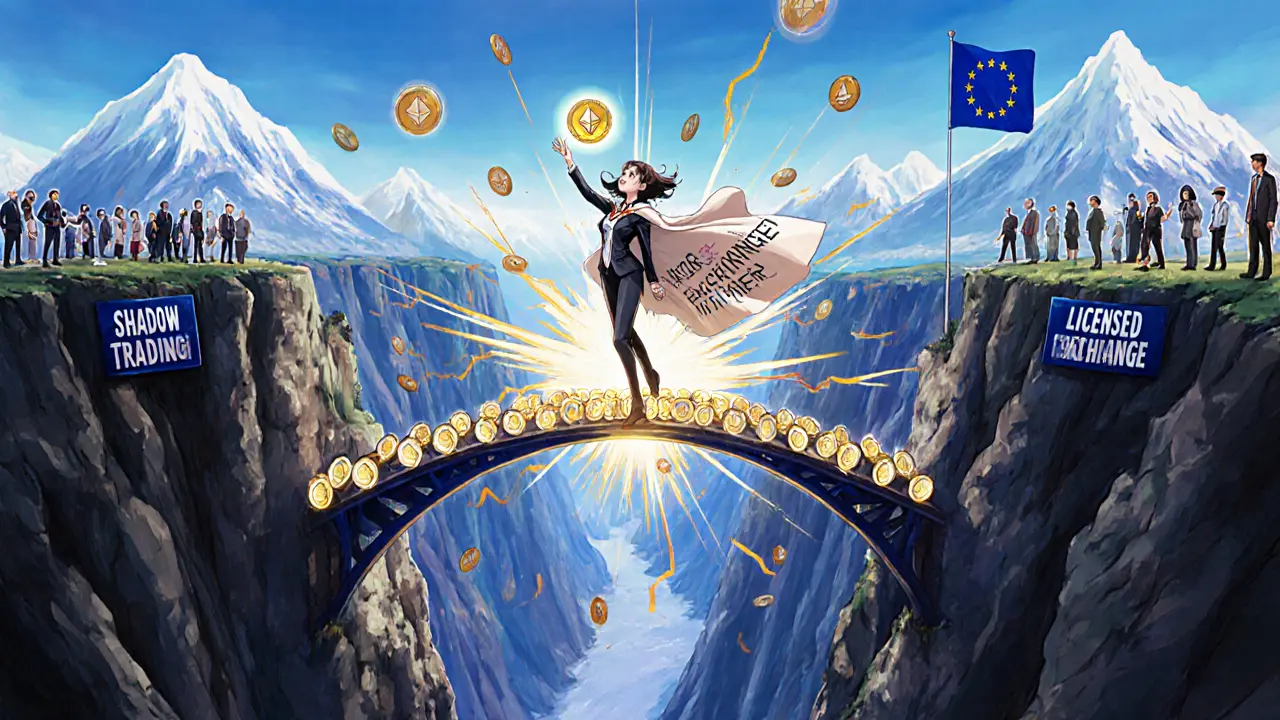
Final Thought: A Bridge, Not a Barrier
North Macedonia’s "partial ban" isn’t about stopping crypto. It’s about controlling it. The government knows crypto isn’t going away. It’s about who gets to play-and under what rules.By adopting MiCA, North Macedonia isn’t rejecting innovation. It’s trying to join the table. The question isn’t whether crypto will survive here. It’s whether the country will become a hub for compliant, EU-aligned crypto businesses-or just another place where people trade in the shadows.
Is cryptocurrency illegal in North Macedonia?
No, cryptocurrency is not illegal in North Macedonia. You can own, buy, and sell crypto. But it’s not recognized as legal tender, so you can’t use it to pay for goods or services officially. Banks won’t process crypto transactions, and there’s no legal framework protecting your investments.
Can I trade crypto on local exchanges in North Macedonia?
Not yet. As of October 2025, there are no licensed crypto exchanges operating in North Macedonia. All trading happens through foreign platforms like Binance or Kraken. The government plans to launch a licensing system in 2025-2026, which could change this.
Do I have to pay taxes on crypto profits in North Macedonia?
The tax rules are unclear. The government hasn’t officially stated whether crypto gains are taxable. Many people assume capital gains tax applies, as in most EU countries, but there’s no legal confirmation. Keep detailed records of all trades in case tax authorities introduce rules later.
Is North Macedonia planning to ban crypto completely?
No. North Macedonia is moving toward regulation, not prohibition. The government is drafting laws based on the EU’s MiCA framework, aiming to license exchanges and protect investors. The goal is to create a legal, transparent market-not to shut it down.
Why is North Macedonia regulating crypto now?
North Macedonia is preparing to join the European Union. EU member states must follow the MiCA framework for crypto regulation. By aligning its laws now, North Macedonia is trying to meet EU requirements and attract foreign investment. The 2024 government made crypto regulation a priority to support economic growth and EU accession.
Can I use crypto to send money to family in North Macedonia?
Yes, but indirectly. You can send stablecoins like USDC via blockchain to someone in North Macedonia, who can then cash out through a peer-to-peer platform or local crypto-friendly service. Some startups are already doing this to avoid high bank fees. But the recipient can’t deposit crypto directly into a bank account.
DINESH YADAV
October 27, 2025 AT 10:20So let me get this straight - North Macedonia is too weak to ban crypto but too scared to regulate it? Classic Balkan indecision. Meanwhile, India is building its own digital rupee and crushing illegal crypto pumps. This half-measure nonsense is why your economy stays stuck in 2012. Get a spine or get left behind.
rachel terry
October 27, 2025 AT 11:24Oh wow a "partial ban" how poetic. Like saying you're "partially pregnant" or "kinda dead". The real story here is that North Macedonia is just too lazy to write laws so they can pretend they're not doing anything while everyone else moves on. Also MiCA? Please. That's the EU's way of saying "we'll regulate you into oblivion but call it innovation."
Susan Bari
October 27, 2025 AT 16:34Let me just say - the fact that someone wrote an entire article about a country that doesn’t even have a crypto ATM and called it "what you need to know" is the most ironic thing I’ve read this week. I mean, who even lives here? Are we talking about people who still use fax machines for tax filings? The only revolution happening is the one in their denial. Blockchain for land registry? Cute. Until the government loses the spreadsheet.
Sean Hawkins
October 28, 2025 AT 04:01It’s important to distinguish between legality and regulation here. Cryptocurrency ownership is not prohibited - that’s a key point. The absence of a legal framework doesn’t equate to prohibition, but it does create significant operational risk. Under MiCA, licensed entities will be required to implement KYC/AML protocols, custody safeguards, and transparent token disclosures. Until then, users are operating in a de facto unregulated space, which exposes them to counterparty, liquidity, and legal enforceability risks. If you’re holding crypto, non-custodial wallets are non-negotiable. And yes - tax treatment remains ambiguous, but prudent recordkeeping is the only defense against future clawbacks. This isn’t a ban. It’s a transitional phase.
Marlie Ledesma
October 28, 2025 AT 12:32I just feel bad for the people trying to send money home to their families. Imagine having to rely on peer-to-peer crypto just to avoid paying 10% in fees - and then worrying if it’s even legal. No one should have to choose between helping their loved ones and risking a government audit. I hope the new rules come fast and include real protections for regular people, not just startups and exchanges.
Daisy Family
October 28, 2025 AT 21:45So the gov’t is "drafting MiCA" like it’s a Netflix show. "Season 1: The Gray Zone" coming soon to Skopje. Meanwhile, my cousin in Belgrade just paid for his coffee in BTC and got a discount. Guess who’s winning? The people who don’t wait for permission to use tech. #MiCAButMakeItChaos
Paul Kotze
October 29, 2025 AT 07:40This is actually a really balanced take. I’ve been watching this space closely from South Africa - the fact that North Macedonia is using this as a stepping stone to EU accession makes sense. Most emerging economies either ban crypto outright or let it run wild. This middle path is risky but smart. The real test will be whether local fintechs can build on blockchain without relying on foreign exchanges. The remittance example with USDC? That’s the future right there. If they get the licensing right, this could be a model for other Balkan nations.
Jason Roland
October 29, 2025 AT 17:07I get why people are frustrated - but let’s not pretend this is a failure. Most countries that rushed into crypto regulation ended up chasing away innovation. Look at what happened in Germany with the tax reporting nightmare. North Macedonia has a chance to learn from others. The fact that they’re using MiCA as a blueprint means they’re not reinventing the wheel. The real win here is that people are still using crypto despite the fog - that’s organic demand. And startups are finding ways to use blockchain without touching the banking system? That’s innovation thriving in the cracks. This isn’t a ban - it’s a pause. And pauses aren’t always bad. They give you time to build something that lasts.