
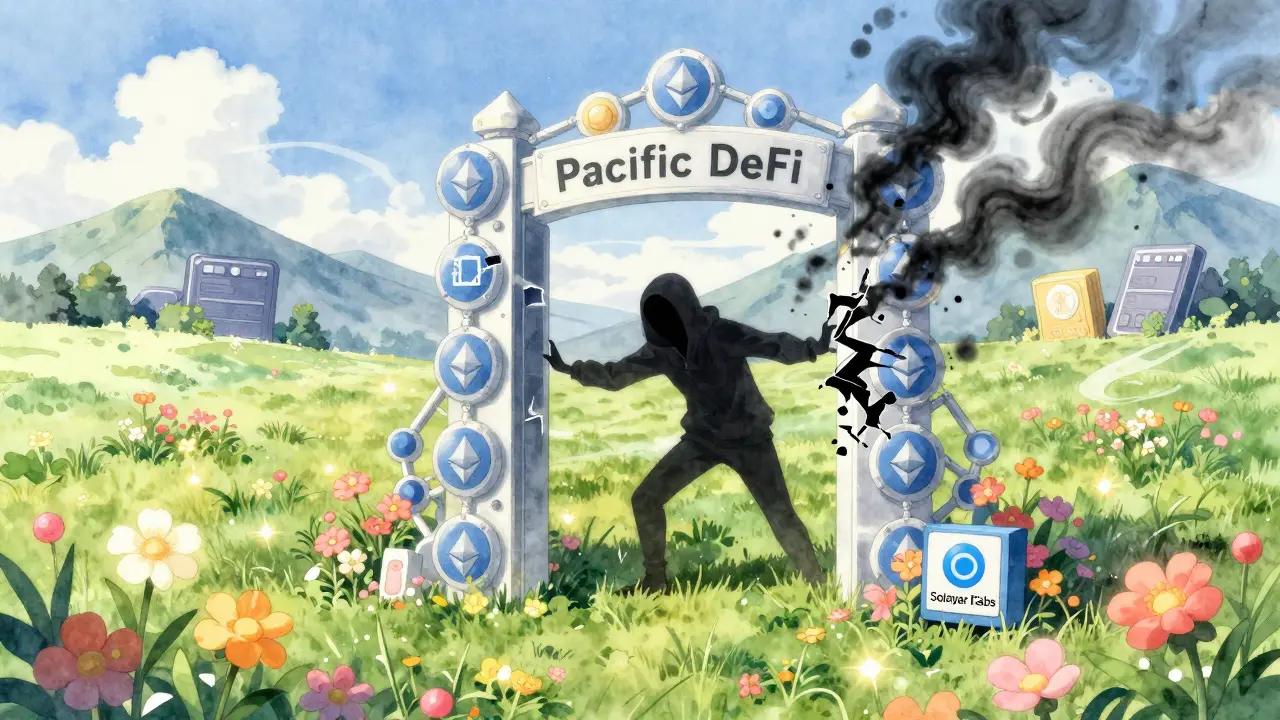
There’s no such thing as a Pacific DeFi IDO airdrop. Not because it’s hidden, not because it’s too new, but because it doesn’t exist. If you’ve seen a post, tweet, or Telegram group claiming that Pacific DeFi is launching an airdrop before its IDO, you’re being targeted by a scam.
Why You Won’t Find Pacific DeFi Anywhere
Check any major crypto tracking site-Airdrops.io, ICOAnnouncement.io, ZebPay’s top airdrops list, CryptoNinjas, ICO Bench, or even CoinPedia Markets. None of them list Pacific DeFi. Not a single one. Not even a mention. That’s not an oversight. It’s a red flag.Legitimate DeFi projects don’t vanish from public records. They have whitepapers. They have GitHub repos. They’re listed on launchpads like Polkastarter, DAO Maker, or BSCPad. They have audits from firms like CertiK or Hacken. They have Twitter accounts with thousands of followers and active Discord communities. Pacific DeFi has none of that.
Compare that to Nexchain, which raised over $10 million in its presale and documented every stage publicly. Or Solayer Labs, which tracked user interactions with synthetic assets to determine airdrop eligibility. Those projects are real. Pacific DeFi is a ghost.
How Scammers Use Fake Airdrops to Steal Your Crypto
Scammers love the word “airdrop.” It sounds free. It sounds easy. They know you’re excited about getting free tokens, so they make it look real. They’ll send you a link to a fake website that looks just like a real DeFi platform. They’ll ask you to connect your wallet. They’ll say you need to pay a small gas fee to “claim” your tokens. That’s the trap.Once you connect your wallet to a fake site, they can drain it. No need to guess your password. No need to hack your phone. You give them access yourself. And once you do, every token in that wallet-ETH, SOL, USDC, even your NFTs-can vanish in seconds.
Real airdrops don’t ask you to send crypto to claim tokens. They don’t ask for your private key. They don’t ask you to sign strange transactions. If a project asks you to pay anything to get free tokens, it’s a scam. Always.
What Legitimate IDOs Look Like
If you want to participate in a real IDO, here’s what you should see:- A public, detailed whitepaper explaining the tokenomics, use case, and roadmap
- A verified contract on Etherscan or Solana Explorer
- A partnership with a known launchpad like Polkastarter, DAO Maker, or Seedify
- A public team with real names, LinkedIn profiles, and past projects
- Clear participation steps: whitelist your wallet, complete KYC, fund your wallet, and claim tokens after the IDO
- Audit reports from reputable firms, publicly available
None of that exists for Pacific DeFi. And if you can’t find it on any of those platforms, it’s not real.

How to Spot a Fake Crypto Project
Here’s a quick checklist to protect yourself:- Search the project name on Airdrops.io and ZebPay. If it’s not there, it’s likely fake.
- Google the project name + “whitepaper.” If the first result is a blog post or Telegram channel, not a PDF, walk away.
- Check the contract address on Etherscan. If it’s not verified, or if it’s a brand-new contract with zero transactions, it’s a trap.
- Look for the team. If their LinkedIn profiles are blank, or if they use stock photos, that’s a red flag.
- Join their Discord. If the admins are pushing you to hurry, saying “limited spots,” or deleting questions about audits-that’s a scam.
- Search GitHub. If there’s no repo, or if the last commit was six months ago, the project isn’t active.
Scammers rely on FOMO. They want you to act fast before you think. Slow down. Verify everything.
What to Do If You’ve Already Connected Your Wallet
If you’ve already connected your wallet to a site claiming to be Pacific DeFi, act now:- Do not approve any transaction. Do not click “Confirm” on any pop-up.
- Go to Etherscan or your chain’s explorer and check your wallet’s transaction history. Look for any unusual approvals or transfers.
- Revoke all permissions from suspicious sites using a tool like Revoke.cash. This stops them from draining your wallet even if you didn’t send funds yet.
- Consider moving your remaining funds to a new wallet. Use a hardware wallet if you have one.
- Report the site to the platform where you found it (Twitter, Telegram, Reddit). Many scams are taken down quickly when reported.
Time matters. The longer you wait, the harder it is to recover your assets.
Real Airdrops in 2025 You Can Actually Trust
If you’re looking for legitimate airdrops this year, here are a few verified ones:- Story Protocol - Rewarding users who created and shared decentralized stories on their platform
- Solayer Labs (LAYER) - Airdropping to users who interacted with synthetic assets on Solana
- Plume Network (PLUME) - Rewarding early stakers and testnet participants
- Buzzeum (BUZZ) - Airdropping to users who engaged with their decentralized social platform
All of these have public documentation, audit reports, and verified launchpad partnerships. No one is asking you to pay to claim. No one is hiding their team. They’re transparent. That’s how real projects operate.
Final Warning: Don’t Be the Next Victim
The crypto space is full of opportunity. But it’s also full of people who want to take your money. Pacific DeFi isn’t a project. It’s a trap. And there are hundreds like it-each one designed to look just real enough to fool you.Never trust a free token that asks you to pay for it. Never connect your wallet to a site you can’t verify. Never believe hype without proof.
When in doubt, wait. Research. Ask. If no one else has heard of it, it’s probably not real.
There’s no rush. Your crypto is safer when you’re slow and smart.