
The Privacy Paradox in Web3 Identity
You hold your phone. It contains your photos, your banking apps, and increasingly, your digital passport. Now imagine if every transaction you made with that passport was etched into stone, visible to anyone with an internet connection, forever. That is the current reality for many exploring NFT-based digital identity systems.
We are standing at a crossroads in the evolution of personal data. On one side, we have the old world: centralized servers run by tech giants, prone to massive breaches where millions of passwords and addresses leak overnight. On the other side, we have the promise of Web3: self-sovereign identity (SSI), where you own your data via blockchain tokens. But there is a catch. The very feature that makes blockchain trustworthy-its transparency-is also its biggest threat to your privacy.
If you are looking to use non-fungible tokens (NFTs) to store or verify your identity, you need to understand the mechanics before you mint. This isn't just about keeping your art collection secret; it's about protecting your legal name, your credentials, and your financial history from being permanently linked to your public wallet address. Let’s break down how this technology works, where it fails, and what new solutions like Secret NFTs and Zero-Knowledge Proofs offer for 2026.
Why Standard NFTs Are Dangerous for Identity
To understand the risk, we first need to look at how standard NFTs work. Most identity proposals rely on the ERC-721 standard, the same protocol used for Bored Apes and CryptoPunks. When you mint an NFT, two things happen:
- The Token Exists On-Chain: A record is created on the blockchain stating that Wallet A owns Token X.
- The Metadata Points Off-Chain: Usually, the actual image or data file lives on a server (like IPFS or AWS), and the NFT contains a link (URI) to that file.
Here lies the privacy trap. If you use an NFT to represent your driver’s license or university degree, your wallet address becomes publicly associated with that credential. Even if the sensitive data itself is stored off-chain, the fact that you possess that credential is visible to everyone. In a public ledger, "Wallet 0x123..." owning "University Degree NFT #45" is permanent. You cannot delete it. You cannot hide it.
This creates a direct conflict with regulations like the GDPR (General Data Protection Regulation) in Europe, which grants users the "right to be forgotten." Blockchain is immutable; GDPR requires erasure. As analysts at walt.id have pointed out, standard NFTs are excellent for modeling what you own, but terrible for modeling who you are. They lack the nuance required for human identity, which is fluid, contextual, and private.
| Feature | Web2 (Centralized) | Standard NFT (Public Chain) |
|---|---|---|
| Data Control | Corporation holds keys | User holds keys |
| Transparency | Hidden from public | Fully visible to all |
| Breach Risk | High (Single point of failure) | Low (Decentralized) |
| Right to Erase | Supported (GDPR compliant) | Impossible (Immutable) |
| Identity Linkage | Email/Phone linked internally | Wallet address linked publicly |
The Rise of Soulbound Tokens (SBTs)
In response to the transferability issue of standard NFTs, Vitalik Buterin introduced the concept of Soulbound Tokens (SBTs) in 2022. By 2026, SBTs have become a cornerstone of many decentralized identity protocols. Unlike tradable NFTs, SBTs cannot be sold or transferred. Once issued to your wallet (your "Soul"), they stay there.
Imagine receiving an SBT for a medical vaccination record or a professional certification. Because it can't be sold, it proves you earned it, not someone who bought it second-hand. This solves the authenticity problem. However, it introduces a new privacy nightmare: Wallet Spam.
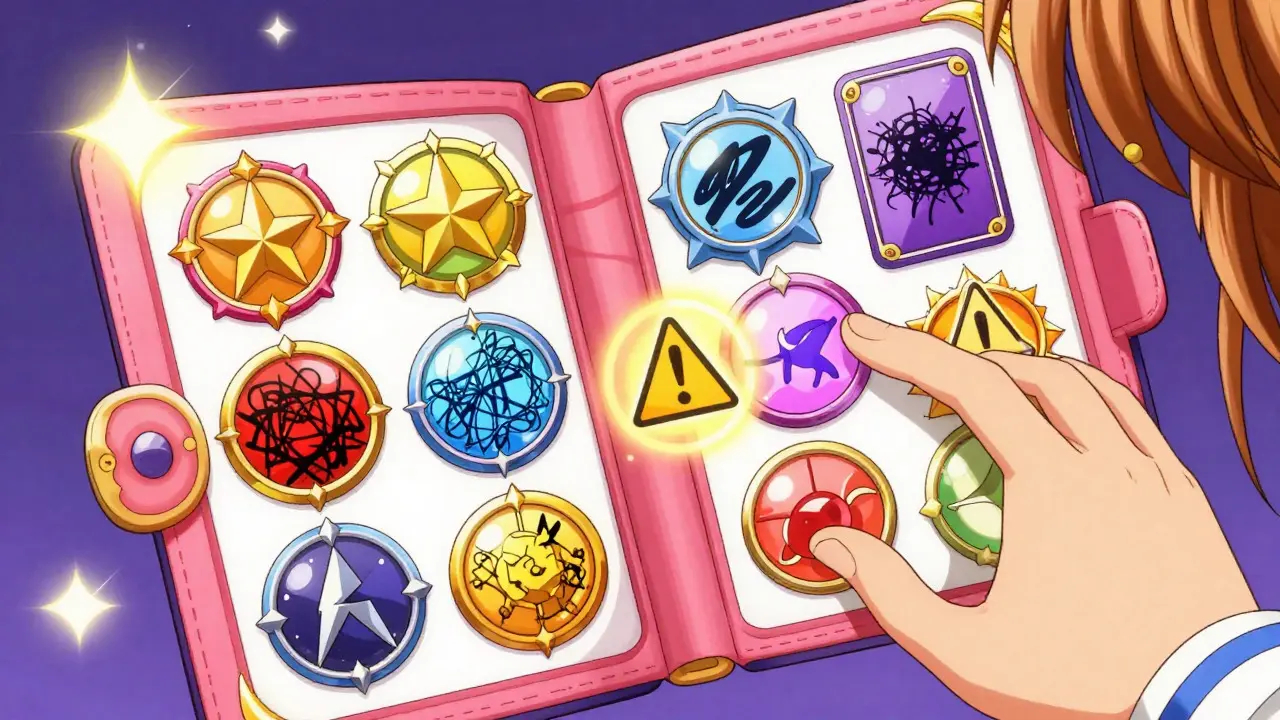
Since anyone can issue an SBT to any wallet address, bad actors can flood your wallet with unwanted badges. Imagine waking up to find your wallet cluttered with SBTs saying "Crypto Scam Victim" or "Political Dissident," issued by strangers. These tokens stick to your digital soul, potentially affecting your reputation score in decentralized finance (DeFi) protocols or social graphs. Without robust consent mechanisms, SBTs turn your wallet into a billboard for anyone willing to pay gas fees.
Secret NFTs: Hiding Ownership in Plain Sight
One of the most promising technological shifts in 2025 and 2026 has been the adoption of Secret NFTs, primarily built on networks like Secret Network. These aren't just regular NFTs with a password; they use encrypted computation to keep ownership hidden.
How does it work? In a standard NFT, the blockchain says: "Alice owns Cat #1." In a Secret NFT, the blockchain stores an encrypted hash. Only Alice, using her private key, can decrypt the metadata to see the full-resolution image or verify the underlying data. To the rest of the network, it looks like gibberish. Crucially, ownership itself can be obscured.
This allows for "private collections." You can hold high-value identity documents or rare assets without the world knowing you have them. For identity, this means you can prove you hold a valid credential (e.g., "Over 18") without revealing your specific age or name to the verifier unless necessary. It bridges the gap between the immutability of blockchain and the confidentiality required for personal data.
Zero-Knowledge Proofs: The Holy Grail of Privacy
If Secret NFTs hide the data, Zero-Knowledge Proofs (ZKPs) allow you to prove facts without showing the data. This is the critical missing piece for widespread NFT identity adoption.
Consider this scenario: You want to enter a club that requires patrons to be over 21. In the Web2 world, you hand over your driver's license. The bouncer sees your name, address, and exact birthdate-more info than he needs. He might even photocopy it.
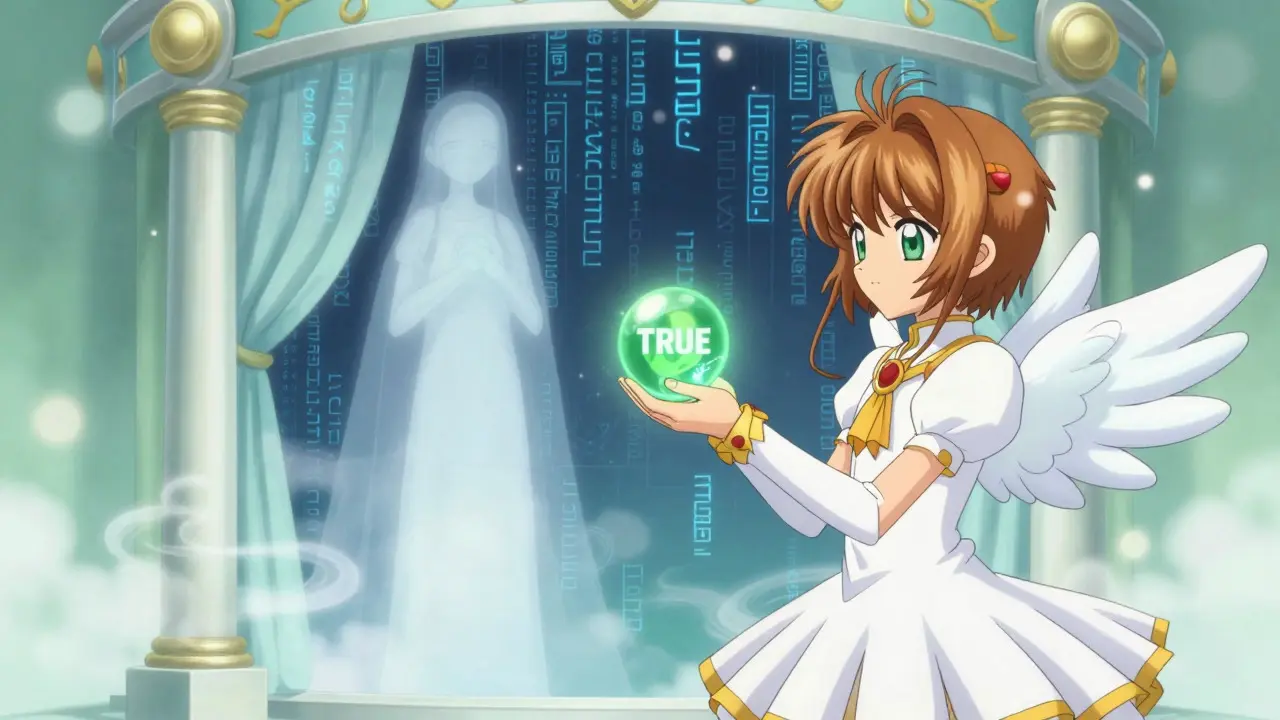
In a ZKP-enabled NFT identity system, your wallet generates a cryptographic proof. You show the bouncer a green light that says "TRUE: Age > 21." No name. No address. No birthdate. Just the mathematical certainty that the statement is true based on the credential stored in your NFT. The verifier checks the proof against the blockchain anchor, but never sees the raw data.
Protocols like Polygon ID and Worldcoin are pushing this forward. By combining SBTs (for non-transferable credentials) with ZKPs (for selective disclosure), we get a system where:
- You own your credentials (Self-Sovereignty).
- Credentials cannot be faked or sold (Immutability/SBTs).
- You reveal only what is strictly necessary (ZKPs).
Implementation Challenges in 2026
Despite these advancements, deploying privacy-preserving NFT identity is not plug-and-play. Several hurdles remain for developers and users alike.
Interoperability Fragmentation: Not all blockchains talk to each other seamlessly. An SBT issued on Ethereum may not be easily verifiable on Solana or a Layer-2 solution like Arbitrum without complex bridge mechanisms. Each bridge introduces a potential attack vector. Standards like DIDs (Decentralized Identifiers) and VC (Verifiable Credentials) defined by the W3C are helping, but universal adoption is still years away.
User Experience (UX) Friction: Managing private keys is hard. If you lose your seed phrase, you lose your identity. There is no "Forgot Password" button in crypto. For the average user, juggling multiple wallets, managing gas fees for verification, and understanding the difference between a public NFT and a Secret NFT is overwhelming. Successful implementations will require seamless abstraction-where the blockchain complexity is hidden behind a familiar app interface.
Regulatory Uncertainty: Governments are still figuring out how to regulate decentralized identity. While GDPR protects EU citizens, other jurisdictions may demand different levels of data access. A global, borderless blockchain clashes with local laws. We are seeing increased pressure for "regulatory nodes" where certain data must be accessible to authorities under strict warrants, potentially compromising the end-to-end encryption promises of early Web3 advocates.
Best Practices for Users and Developers
If you are building or using NFT-based identity systems today, follow these guidelines to maintain privacy:
- Use Dedicated Wallets: Never use your main trading wallet for identity. Create a separate "Identity Wallet" to isolate your personal credentials from your financial transactions. This prevents correlation attacks where hackers analyze your spending habits to deduce your identity.
- Prioritize ZK-Compatible Protocols: Look for identity solutions that support Zero-Knowledge Proofs. Avoid systems that require you to upload raw PDFs or images directly to public IPFS gateways without encryption.
- Audit Smart Contracts: For developers, ensure that the smart contracts governing your SBTs have strict access controls. Who can issue them? Can they be revoked? Revocability is crucial for identity-if a degree is revoked by a university, the corresponding SBT should reflect that status change.
- Minimize On-Chain Data: Store as little as possible on the blockchain. Use the chain only for anchoring hashes or issuing revocation registries. Keep the actual PII (Personally Identifiable Information) in secure, encrypted off-chain storage, accessible only via your private keys.
The Future: Hybrid Architectures
The future of NFT-based identity isn't purely on-chain or purely off-chain. It is hybrid. We are moving toward architectures where the blockchain serves as a trust anchor-a tamper-proof log of existence-while the heavy lifting of privacy and data storage happens in encrypted layers above it.
By late 2026, we expect to see more integration with traditional government IDs. Pilot programs in countries like Estonia and Singapore are already testing how blockchain-backed credentials can interact with existing civil registries. The goal is not to replace governments, but to give citizens control over how their government-issued data is shared with third parties.
Privacy in NFT identity is no longer a theoretical debate. It is an engineering challenge. With tools like Secret NFTs and ZKPs maturing, the tension between transparency and confidentiality is easing. But vigilance is required. The code is law, but the law must protect the human. As we adopt these new digital skins, we must ensure they fit us well, without exposing our skeletons to the world.
Are NFTs safe for storing personal identity data?
Standard NFTs on public blockchains are generally unsafe for storing raw personal identity data because the association between your wallet and the data is public and permanent. However, advanced solutions like Secret NFTs and Zero-Knowledge Proofs make them viable by encrypting the data and hiding ownership details, ensuring only verified parties can access the information.
What is the difference between an NFT and a Soulbound Token (SBT)?
An NFT is transferable; you can sell or send it to another wallet. A Soulbound Token (SBT) is non-transferable. Once issued to your wallet, it stays there forever. SBTs are better suited for identity credentials like degrees or certifications because they prove you personally earned them, rather than just buying them.
How do Zero-Knowledge Proofs protect my privacy in Web3?
Zero-Knowledge Proofs (ZKPs) allow you to prove a statement is true without revealing the underlying data. For example, you can prove you are over 18 without showing your birthdate or name. In NFT identity, ZKPs enable selective disclosure, so you share only the minimum necessary information with verifiers.
Can I delete my NFT-based identity if I want to exercise my 'Right to be Forgotten'?
Direct deletion from a public blockchain is impossible due to immutability. However, modern privacy-focused systems handle this by storing only a hash or pointer on-chain. To exercise the right to be forgotten, the off-chain data is deleted, rendering the on-chain hash useless. Some systems also use revocation registries to invalidate the credential's status without removing the token itself.
What are Secret NFTs and how do they differ from regular NFTs?
Secret NFTs are tokens that utilize encrypted computation to hide both the metadata and the ownership history from the public view. Unlike regular NFTs where anyone can see who owns what, Secret NFTs allow owners to keep their holdings private, making them ideal for sensitive applications like digital identity and confidential asset tracking.