
Trading crypto in Bangladesh isn't just risky-it’s illegal
If you're a citizen of Bangladesh and you're thinking about buying Bitcoin, trading Ethereum, or using USDT to send money overseas, you need to understand one thing upfront: you're breaking the law. The Bangladesh Bank banned all cryptocurrency activity in 2017, and that ban hasn't just stayed in place-it’s gotten tighter. By 2025, the government added new biometric checks, cracked down on mining, and made it harder than ever to open accounts on local platforms. Yet, people are still trading. Why? Because the need to move money, hedge against inflation, or access global markets is real. But the cost? It’s not just lost coins. It’s jail time, frozen bank accounts, and no way to get help when things go wrong.
Legal consequences are real-even if enforcement seems inconsistent
The law is clear: no buying, no selling, no holding crypto in Bangladesh. The central bank’s 2017 notice didn’t leave room for interpretation. It called crypto a threat to financial stability and tied it directly to money laundering and Ponzi schemes like MTFE. Violators can be prosecuted under the Money Laundering Prevention Act. That means fines, asset seizures, and even imprisonment.
But here’s the twist: you can still download Binance and KuCoin from the Google Play Store in Bangladesh. Many users sign up with just an email and a phone number. No ID checks. No proof of address. The apps work. Transactions go through. So why aren’t people getting arrested every day? Because enforcement is patchy. Authorities focus on big operators, not individual traders. That creates a dangerous illusion: if no one’s getting caught, maybe it’s safe. It’s not. One bank statement showing a transfer to a foreign crypto exchange could trigger a full investigation. And once you’re under scrutiny, your entire financial history is fair game.
Your money is at risk-no matter how you buy crypto
There are two main ways Bangladeshis get crypto: international cards or local agents. Both are risky, but in very different ways.
If you use a credit or debit card issued in US dollars, your bank can track the transaction. Even if you’re using a third-party payment processor, the money trail leads back to you. Banks in Bangladesh are forbidden from dealing with crypto, so if they spot a pattern-say, regular payments to Binance or Coinbase-they’re required to report it. That’s not speculation. It’s policy. And once reported, your account could be frozen while authorities investigate.
The other route? Local agents. These are people-often in markets, shops, or even homes-who buy and sell Bitcoin or USDT for Bangladeshi Taka. They charge a small fee, usually 1-3%, and make money from the spread between buy and sell prices. Sounds simple? It’s not. These agents aren’t licensed. They don’t have licenses. They don’t keep records. If they disappear, you have no recourse. There’s no customer service line. No dispute portal. No regulator to call. People lose thousands of dollars this way every year. And because the transaction is cash-based and off the books, there’s no paper trail to prove you were scammed.
Trading has gone underground-and it’s getting more dangerous
When the government added new biometric verification rules in 2025, local exchanges lost 30% of their users in one week. Why? Because filling out forms, scanning your face, and waiting three days just to trade crypto is too much for people who already know it’s illegal. So they left. And they didn’t go quiet. They moved to Telegram.
Telegram groups are now the main marketplace for crypto in Bangladesh. Thousands of groups exist. Some are legit. Most aren’t. You’ll find people offering “guaranteed” returns on USDT, fake mining schemes, and bots that promise to double your money overnight. Scams are rampant. One trader in Dhaka lost 8.5 million BDT after sending funds to a group admin who vanished. No police report helped. No bank reversed the transaction. It was gone.
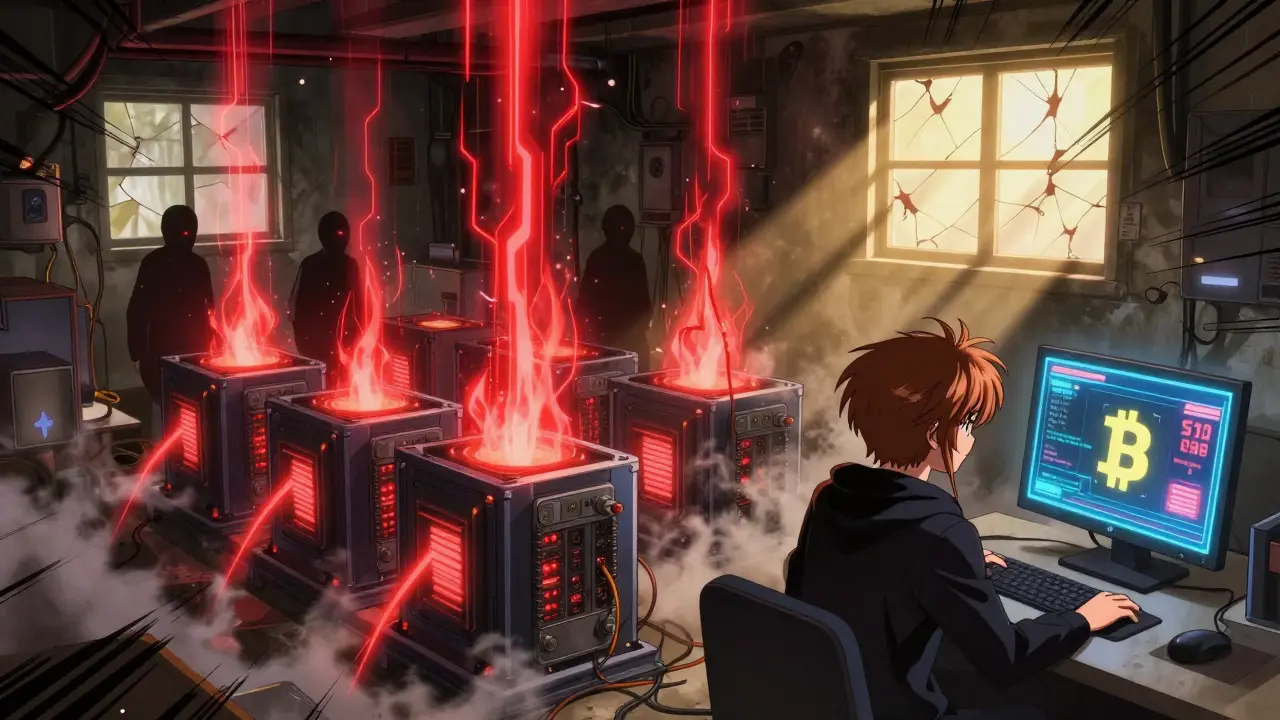
Even mining-once a niche activity-is now forced into basements and warehouses in Chittagong. Power companies report fewer spikes in electricity use, but landlords are quietly upgrading ventilation systems to handle heat from hidden rigs. These operations are invisible to regulators… until they’re not. A single raid can shut down an entire building, seize equipment, and arrest everyone inside.
You could owe taxes on illegal activity
This part trips up a lot of people. Even though crypto trading is illegal in Bangladesh, the National Board of Revenue still treats crypto profits as taxable income. Under the Income Tax Ordinance of 1984, any gain from asset sales-whether it’s land, shares, or Bitcoin-is subject to tax. So if you bought Bitcoin at 3 million BDT and sold it for 5 million, you owe tax on the 2 million profit.
But here’s the catch: you’re legally required to declare income you earned through an illegal activity. That means filing a tax return that admits you broke the law. Do that, and you risk prosecution. Don’t file, and you risk tax penalties. Either way, you’re in trouble. There’s no safe path. No loophole. Just a legal trap where the government can punish you twice-for breaking the law and for not paying taxes on it.
Compared to neighbors, Bangladesh is an outlier
India taxes crypto at 30% and takes 1% at source. Pakistan allows Bitcoin trading and even holds reserves. Nepal has a licensing system for exchanges. Bangladesh? No licenses. No taxes. No recognition. Just a flat-out ban.
This isolation forces people into riskier alternatives. In India, you can use regulated exchanges with KYC, insurance, and customer support. In Bangladesh, you can’t. That means no protection if a platform crashes. No refund if you’re hacked. No legal standing if you’re defrauded. You’re on your own. And when you’re alone in a system designed to catch you, the odds are stacked against you.
Your bank account could be frozen-or worse
Financial institutions in Bangladesh are barred from any interaction with crypto. That means if your bank sees a pattern of transfers to overseas wallets, they can freeze your account. Not just your crypto-related transactions. Your salary account. Your savings. Your child’s education fund. All of it. And once frozen, it can take months-or years-to get it back, even if you did nothing wrong.
Worse, if you run a business and use crypto to pay suppliers or receive payments, your entire operation could be flagged as suspicious. Banks may cut off your lines of credit. Suppliers might refuse to work with you. Loan applications get denied. You’re not just risking your crypto-you’re risking your livelihood.
The future won’t get safer
There’s no sign the government is going to change its mind. The 2025 regulatory update didn’t soften anything-it added more control. Biometrics. Surveillance. Reporting requirements. And with every new tool, the chances of getting caught go up.
Experts warn that as more capital flows out of Bangladesh through crypto, the government will respond with even harsher measures. Already, offshore platforms report a 200% increase in Taka deposits from Bangladesh. That’s billions of dollars moving out of the country. The central bank sees this as a threat to the national currency. And their solution? More restrictions. More monitoring. More fear.
There’s no indication that legal, safe crypto access is coming. Not in 2026. Not in 2027. The path forward isn’t regulation-it’s repression. And if you’re trading now, you’re trading with your freedom on the line.
What happens if you get caught?
There’s no public record of how many people have been prosecuted. That’s by design. The government doesn’t want to encourage others to test the system. But anecdotal reports suggest arrests happen. They’re rare. But they’re real.
One case in 2024 involved a university student in Sylhet who bought $15,000 worth of USDT through an agent. His bank flagged the transfers. Police raided his home. He was held for 17 days. His phone, laptop, and savings were seized. He wasn’t charged with a criminal offense-but his name is now on a financial watchlist. He can’t open a new bank account. He can’t get a job in finance. His credit is ruined.
That’s the reality. Not jail for everyone. But ruin for many.
There’s no safe way to trade crypto in Bangladesh
Not right now. Not with the current laws. Not with the tools available. Every method-cards, agents, Telegram, mining-carries a high chance of loss, legal trouble, or both. The risks aren’t hypothetical. They’re documented. They’re happening. And they’re growing.
If you’re considering crypto in Bangladesh, ask yourself: Is the potential gain worth losing your bank account, your job, your freedom? There’s no answer that makes this safe. Only ones that make it less dangerous. And even then, the danger remains.
Is cryptocurrency completely illegal in Bangladesh?
Yes. Since 2017, the Bangladesh Bank has banned all cryptocurrency transactions, including buying, selling, holding, and mining. The law is still in full effect as of 2026, with no signs of relaxation. Violations can lead to prosecution under anti-money laundering laws.
Can I use Binance or KuCoin in Bangladesh?
You can download and use apps like Binance and KuCoin, and many people do. But using them violates Bangladeshi law. While enforcement is inconsistent, your bank can track payments to these platforms, and your account may be frozen if flagged. No legal protection exists for users on these platforms in Bangladesh.
What happens if I lose money trading crypto through a local agent?
You have no legal recourse. Local agents operate outside the banking system and are not regulated. If they disappear, scam you, or refuse to pay out, you cannot file a complaint with any authority. Police and banks will not help because the transaction itself is illegal.
Do I have to pay taxes on crypto profits in Bangladesh?
Yes. The National Board of Revenue applies the Income Tax Ordinance of 1984 to crypto gains, meaning profits are taxable. But since crypto trading is illegal, declaring profits means admitting to breaking the law. This creates a legal trap: pay taxes and risk prosecution, or don’t pay and risk tax penalties.
Can my bank account be frozen for crypto trading?
Yes. Banks in Bangladesh are required to monitor transactions for suspicious activity. If they detect transfers to crypto exchanges or foreign wallets linked to trading, they can freeze your account. This applies to your salary, savings, and business accounts-even if you didn’t know the transaction was flagged.
Is mining cryptocurrency legal in Bangladesh?
No. Mining is explicitly banned under the 2017 directive and further restricted in 2025. Grid operators report a drop in energy use from mining farms, but underground operations continue in secret. These operations carry high risk of raids, equipment seizure, and arrest.
How does Bangladesh’s crypto ban compare to India or Pakistan?
India taxes crypto at 30% and has a regulated framework. Pakistan allows Bitcoin trading and even holds reserves. Bangladesh is the only country in the region with a total ban and no legal pathways. This forces citizens into unregulated, high-risk alternatives like Telegram groups and local agents, with no consumer protection.
Will Bangladesh ever legalize cryptocurrency?
There is no indication this will happen. The government views crypto as a threat to financial stability and currency control. The 2025 regulatory update added more restrictions, not fewer. Experts expect enforcement to tighten further as capital flight increases.