
You’ve probably seen the viral videos of giant pandas eating bamboo or rolling around in zoos. Now, someone has turned that internet cuteness into a cryptocurrency. Enter He Hua, also known by its ticker HUAHUA. It is a community-driven memecoin built on the Ethereum blockchain that celebrates the viral popularity of Chinese pandas. If you are wondering if this is the next big investment or just another digital novelty, you are not alone. The crypto space is flooded with tokens based on animals, jokes, and memes. But He Hua stands out because of its specific branding and its position as an ultra-micro-cap asset. This guide breaks down what He Hua actually is, how it works, and why you need to be careful before buying any.
What Exactly Is He Hua (HUAHUA)?
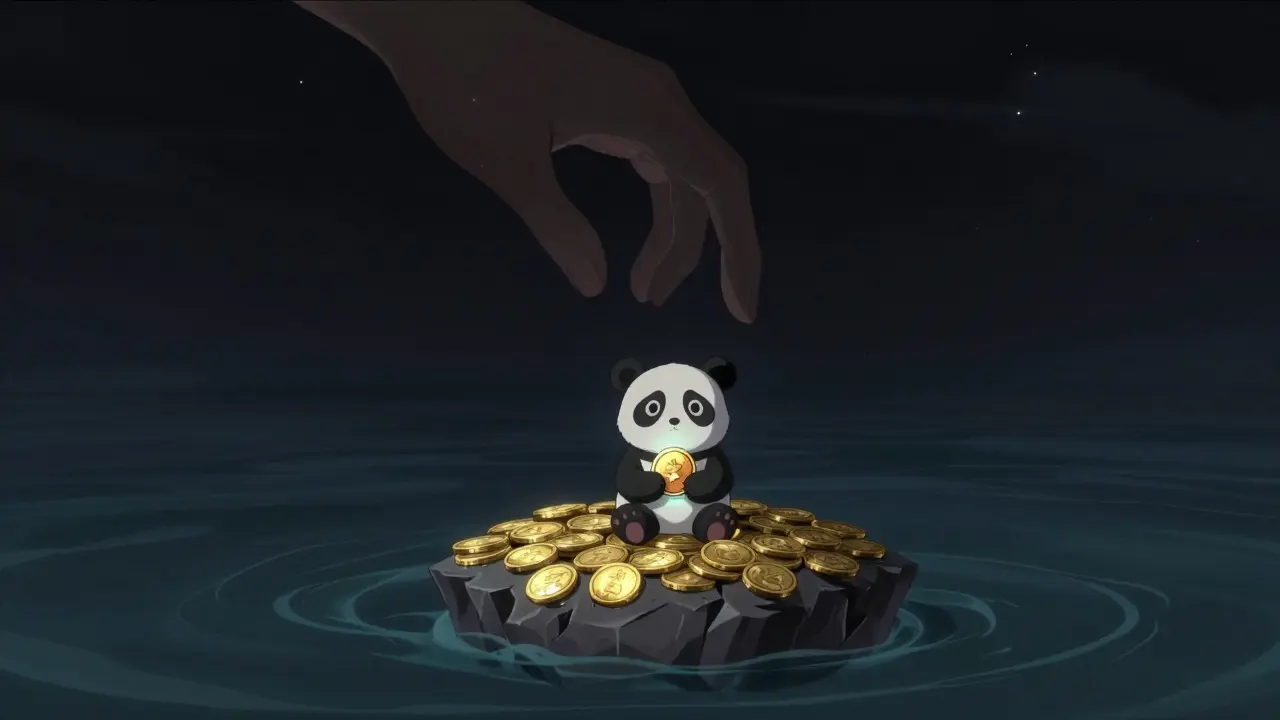
At its core, He Hua is a memecoin. That means it doesn’t have a complex technology behind it, no revolutionary app, and no utility beyond being a tradable asset. Its value comes entirely from community hype, social media trends, and speculative trading. The project markets itself as a tribute to "HeHua," one of China’s most adored pandas, aiming to bring the animal’s "gentle spirit" into the world of crypto.
Technically, He Hua operates as an ERC-20 token on the Ethereum network. This standard allows it to be stored in common Ethereum wallets like MetaMask or Bitget Wallet and traded on decentralized exchanges. Because it lives on Ethereum, every transaction you make with HUAHUA requires you to pay gas fees in ETH, which can get expensive during busy times on the network.
There is no whitepaper detailing a long-term roadmap, and there are no named founders listed on major tracking sites like CoinMarketCap. The team remains anonymous, which is typical for many meme projects but adds a layer of risk. You are essentially betting on the strength of the community rather than a development team’s ability to build software.
Tokenomics: Supply, Taxes, and Contract Ownership
When evaluating any crypto coin, you need to look at its tokenomics-the economic structure of the supply. He Hua has some distinct features here that separate it from other tokens:
- Massive Fixed Supply: The total supply of HUAHUA is fixed at 1,000 trillion (1 quadrillion) tokens. Yes, that is a one followed by fifteen zeros. This ultra-high supply means the price per token will always be a tiny fraction of a cent. It is designed to give buyers large numbers of tokens, which psychologically feels like getting a "lot" for your money, even if the actual value is minuscule.
- Zero Tax: Many modern meme coins charge a fee (tax) on every buy and sell transaction to fund marketing or liquidity. He Hua claims zero tax. This means when you trade, you keep 100% of your tokens. There are no hidden deductions going to a treasury wallet.
- Renounced Contract: The smart contract governing He Hua is described as fully renounced. In simple terms, this means the creator gave up ownership rights to the code. They can no longer change the rules, blacklist addresses, or mint new tokens. This is generally seen as a positive security feature because it prevents the developer from pulling a rug pull by altering the contract later.
However, while the contract is renounced, there is no public record of third-party security audits. Renouncing ownership stops the owner from changing things, but it doesn’t guarantee the original code was free of bugs or vulnerabilities. Always do your own research before interacting with un-audited contracts.
He Hua vs. HUA HUA on Solana: Don't Get Confused
This is where things get tricky. If you search for "HUAHUA" online, you might find two completely different coins. One is the Ethereum-based He Hua we just discussed. The other is HUA HUA on the Solana blockchain.
They share the same ticker symbol and similar panda themes, but they are unrelated projects with vastly different economics. Mixing them up could lead to losing your money if you send funds to the wrong address.
| Feature | He Hua (ETH) | HUA HUA (SOL) |
|---|---|---|
| Blockchain | Ethereum (ERC-20) | Solana (SPL Token) |
| Total Supply | 1 Quadrillion (1,000T) | ~1 Billion |
| Contract Status | Renounced | Renounced + Burnt Liquidity |
| Market Cap (Approx.) | $8,460 USD | $65,130 USD (FDV) |
| Tax | 0% | 0% |
The Solana version has a much smaller supply (1 billion vs. 1 quadrillion), which usually results in a higher price per token. It also explicitly mentions "burnt liquidity," meaning the initial pool of funds used for trading was destroyed to prevent removal, adding another layer of trust. He Hua on Ethereum does not mention burnt liquidity, only that the contract is renounced. Always double-check the contract address before swapping.

Market Performance and Liquidity Risks
Let’s talk about the hard numbers. As of mid-2026, He Hua is classified as a micro-cap cryptocurrency. Its market capitalization hovers around $8,460 USD, according to data from Bitget Wallet. To put that in perspective, you could buy the entire circulating supply of the coin for less than the cost of a nice dinner for four people.
The price per token is incredibly low, often quoted below $0.00000000001 USD. While seeing prices with so many zeros can be exciting for gamblers looking for 1000x returns, it also highlights extreme illiquidity. Major centralized exchanges like Binance, Coinbase, and Crypto.com track the price for informational purposes but do not list it for direct trading. You cannot simply log in and buy HUAHUA with a credit card.
To trade He Hua, you must use a Web3 wallet and interact with decentralized exchanges (DEXs) or swap interfaces. This brings significant risks:
- Slippage: Because the liquidity pool is so small, even a modest buy order can drastically drive up the price, meaning you pay more than expected. Conversely, selling can crash the price instantly.
- Gas Fees: Since it is on Ethereum, you need ETH to pay for transactions. If gas fees are $5 and you only invest $10, you are starting at a loss immediately.
- Volatility: With zero trading volume reported on some days, the price can swing wildly based on a single trade. There is no stable floor.
Compare this to the Solana version, which has a Fully Diluted Valuation (FDV) closer to $65,000 and slightly more activity. Even then, both assets are considered high-risk speculative bets rather than investments.
How to Buy He Hua (Step-by-Step)
If you decide you want to take the risk and buy some He Hua, you won’t find it on Coinbase or Binance. Here is the general process for acquiring ERC-20 meme coins:
- Set Up a Web3 Wallet: Download a non-custodial wallet like MetaMask, Trust Wallet, or Bitget Wallet. Make sure you securely back up your seed phrase. Never share this phrase with anyone.
- Fund Your Wallet with ETH: Buy Ethereum (ETH) on a major exchange and transfer it to your wallet address. You need ETH to pay for the transaction fees (gas) and potentially to swap for HUAHUA.
- Add the HUAHUA Token: Open your wallet and add the custom token. You will need the correct contract address:
0x5a45e2EABbe9464FD4e3E57190A1E8532925Ef13. Double-check this against official sources to avoid scams. - Use a DEX or Swap Interface: Connect your wallet to a decentralized exchange like Uniswap or use the swap feature in your wallet. Select ETH as the input and paste the HUAHUA contract address as the output.
- Execute the Swap: Review the slippage tolerance (you may need to increase it due to low liquidity) and confirm the transaction. Wait for the blockchain to process it.
Remember, once you send tokens to the wrong address or interact with a scam contract, there is no customer support to call. The transaction is irreversible.
Is He Hua a Good Investment?
Let’s be blunt: He Hua is not an investment in the traditional sense. It has no revenue stream, no product, and no clear path to adoption outside of niche communities. It is a speculative asset driven purely by sentiment.
The "renounced contract" and "zero tax" features are good signs that the developers aren’t actively trying to scam users through malicious code changes. However, the lack of liquidity and the tiny market cap mean that exiting your position could be difficult. If everyone tries to sell at once, the price could drop to near zero.
For most people, the risk outweighs the reward. If you choose to participate, treat the money as entertainment costs-like buying a lottery ticket-and never invest more than you can afford to lose completely. Do not borrow money to buy meme coins.
Final Thoughts on Panda Memecoins
The crypto world loves a good mascot. From Dogecoin to Shiba Inu, animal-themed tokens have captured billions in value. He Hua attempts to ride this wave by leveraging the universal appeal of pandas. While the concept is cute and the tokenomics are transparent (fixed supply, no taxes), the reality of the market data tells a story of extreme obscurity.
With a market cap under $10,000 and negligible trading volume, He Hua exists in the shadows of the crypto ecosystem. It serves as a reminder that just because a token is on Ethereum and has a website, it doesn’t mean it has value. Always verify the chain, check the liquidity, and understand the risks before clicking "swap."
Is He Hua (HUAHUA) listed on Coinbase or Binance?
No. He Hua is not tradable on major centralized exchanges like Coinbase or Binance. These platforms may track the price for information, but you cannot buy or sell it directly on their order books. You must use decentralized swaps via Web3 wallets.
What is the difference between He Hua on Ethereum and HUA HUA on Solana?
They are two different tokens on different blockchains. He Hua is on Ethereum with a supply of 1 quadrillion tokens. HUA HUA is on Solana with a supply of roughly 1 billion tokens. They have different contract addresses and should not be confused.
Is the He Hua contract safe?
The contract is "renounced," meaning the owner cannot change it. However, it has not been audited by a third-party security firm. While renouncement reduces the risk of a developer rug pull, it does not guarantee the code is free from bugs.
Why is the price of HUAHUA so low?
The price is extremely low because the total supply is massive (1 quadrillion tokens). Additionally, the market cap is very small (micro-cap), indicating low demand and liquidity compared to established cryptocurrencies.
Can I earn rewards by staking He Hua?
Currently, there is no evidence of staking mechanisms or yield farming options for He Hua. It is primarily a speculative trading token without utility features like staking rewards.