
You’ve probably seen the ticker LOFI pop up on a chart or in a chat group. It promises a mix of mythical storytelling and passive income through a "watch-to-earn" model. But before you buy, you need to know what’s actually under the hood. The short answer? LOFI is a high-risk speculative token with confusing technical details and bearish market signals.
This isn’t your average stablecoin or blue-chip asset like Bitcoin. It’s a project that emerged in 2022, wrapped in a narrative about a snow monster awakening from the Himalayas. While the story is creative, investors care more about utility, liquidity, and transparency. Let’s break down exactly what LOFI is, how it claims to work, and why the data suggests caution.
The Core Concept: What Is LOFI?
LOFI is a cryptocurrency token positioned within the decentralized finance (DeFi) sector, specifically targeting the 'X-to-Earn' niche with its watch-to-earn platform. Unlike move-to-earn apps like StepN or play-to-earn games like Axie Infinity, LOFI attempts to monetize passive content consumption. The idea is simple: users watch streaming content, and in return, they earn tokens.
The branding relies heavily on lore. The project describes a character frozen in ice for thousands of years, emerging to fight against "tribalism and chaos." This positions LOFI as a symbol of optimism and community. However, in the crypto world, narrative doesn’t pay bills-utility does. So far, the specific mechanics of how this earning works remain vague. There is no clear public documentation detailing the algorithm for reward distribution, the content sources, or the sustainability of the token emission rate.
Technical Confusion: Which Blockchain Does LOFI Use?
One of the biggest red flags for any serious investor is technical ambiguity. When researching LOFI, you’ll find conflicting reports about its underlying infrastructure. This matters because the blockchain determines transaction speed, fees, and security.
- Sui Blockchain: Some platforms, including Gate.com, list LOFI as operating on the Sui ecosystem. Sui is a newer Layer 1 blockchain known for high throughput and low latency, designed for scalable applications.
- Solana Blockchain: Other major aggregators, such as CoinSwitch, indicate that LOFI is built on Solana. Solana is a well-established high-performance chain popular for NFTs and DeFi due to its sub-second finality and minimal costs.
Why does this discrepancy exist? It could mean one of three things:
- Multichain Deployment: The token exists on both chains, bridged via wrapped assets.
- Data Error: Tracking platforms have mislabeled the contract address.
- Migration: The project moved from one chain to another, leaving old data behind.
For a user, this creates friction. If you’re trying to connect a wallet or swap tokens, being on the wrong network can lead to lost funds. Always verify the contract address directly from the project’s official channels before interacting.
Tokenomics: Supply, Allocation, and Inflation Risk
Understanding the economics of a token is crucial. If too many tokens are unlocked at once, supply floods the market, driving prices down. Here’s the breakdown for LOFI based on available data:
| Attribute | Value / Detail |
|---|---|
| Total Supply | 10 Billion LOFI |
| Circulating Supply | Approx. 1 Billion (varies by source) |
| Private/Pre-Sale Allocation | 18% (1.8 Billion tokens) |
| Public Sale Allocation | 0.15% (15 Million tokens) |
| IDO Price | $0.005 per token |
| Seed Round Price | $0.0015 per token |
The allocation shows a heavy concentration in private hands. Early investors got in at $0.0015, while the Initial DEX Offering (IDO) was at $0.005. Current trading prices hover around $0.016-$0.03 depending on the exchange. This means early backers are sitting on significant unrealized gains. If they decide to sell, the pressure on the price will be immense. With only 1 billion tokens circulating out of 10 billion total, there is massive inflation risk if the remaining tokens are unlocked without corresponding demand growth.

Market Performance and Price Volatility
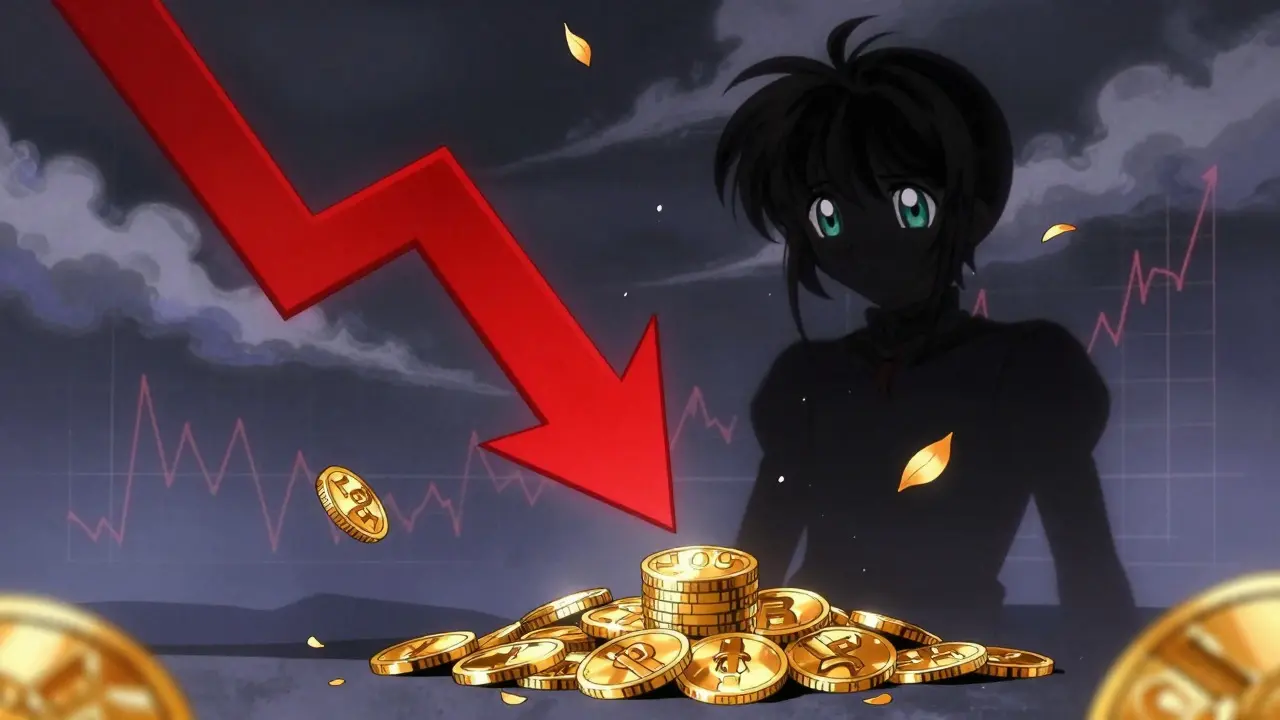
LOFI is not a stable performer. As of mid-2026, the token exhibits extreme volatility and inconsistent data across trackers. This inconsistency itself is a warning sign.
On CoinMarketCap, LOFI might show a price of ~$0.017 with a daily volume of nearly $4 million. Yet, CoinGecko may display different figures, sometimes showing higher volumes but lower prices, or vice versa. CoinCodex often presents a more bearish outlook, citing a Fear & Greed Index in the "Fear" zone (around 33). Technical indicators like the Relative Strength Index (RSI) frequently dip below 40, suggesting oversold conditions but also weak buying momentum.
Look at the moving averages. The 50-day Simple Moving Average (SMA) and the 200-day SMA are often above the current price. In technical analysis, this is a classic bearish signal. It means the long-term trend is downward, and any price bounce is likely just a temporary relief rally rather than a reversal.
The "Watch-to-Earn" Model: Hype vs. Reality
The core value proposition of LOFI is its watch-to-earn mechanism. But how sustainable is it? In the broader crypto economy, "X-to-Earn" models have struggled with retention. Users join for free money, burn through their initial rewards, and leave when the payout drops or the app becomes tedious.
For LOFI to succeed, it needs:
- Real Content Partnerships: Are major streaming services paying LOFI to host ads? Or is the content low-quality filler?
- Revenue Generation: Where does the money come from to pay users? If it’s purely from new user deposits, it resembles a Ponzi structure.
- Governance Utility: Holders should have voting power. Currently, governance structures for LOFI are undocumented. Without a say in protocol decisions, the token is merely a speculative vehicle.
Without these pillars, the watch-to-earn promise is just marketing fluff. Compare this to established projects like Theta Network, which has real partnerships with Samsung and Verizon for video delivery infrastructure. LOFI lacks comparable institutional backing.
Risks You Need to Know Before Buying
If you’re considering adding LOFI to your portfolio, treat it as a high-risk venture capital bet, not an investment. Here are the specific dangers:
- Liquidity Traps: Low trading volume on some exchanges means you might not be able to sell your tokens quickly without crashing the price.
- Regulatory Scrutiny: Earning mechanisms are under increasing regulatory fire. Governments are questioning whether these tokens are securities. A crackdown could freeze assets.
- Smart Contract Risk: If the code hasn’t been audited by top-tier firms like CertiK or OpenZeppelin, bugs could lead to exploits. Given the lack of transparent technical docs, this is a concern.
- Community Churn: Crypto communities driven by memes or stories often evaporate when the price dips. LOFI’s "snow monster" lore may not hold up during a bear market.
How to Verify LOFI Data Yourself
Don’t trust a single source. Here’s a quick checklist to stay safe:
- Check Multiple Aggregators: Compare CoinMarketCap, CoinGecko, and CoinCodex. If prices differ by more than 5%, investigate why.
- Find the Contract Address: Go to the official website or verified Twitter account. Copy the contract address into a block explorer (like Solscan for Solana or Suiscan for Sui).
- Read the Whitepaper: If there is no whitepaper or technical documentation, proceed with extreme caution. Documentation should explain the token utility clearly.
- Monitor Social Sentiment: Look at Reddit and Discord. Are people discussing features, or just asking "when moon"? The latter is a bad sign.
Final Thoughts on LOFI
LOFI is an experiment in blending storytelling with decentralized finance. While the concept of earning while watching content is appealing, the execution so far lacks clarity. The conflicting blockchain information, high supply inflation, and bearish technical indicators suggest that LOFI is still in its infancy-or struggling to find product-market fit.
If you do invest, keep the amount small enough that losing it won’t hurt. Treat it as speculation, not savings. For most users, sticking to established DeFi protocols with clear revenue models and audited code is a safer path to building wealth in crypto.
Is LOFI a good investment in 2026?
LOFI is considered a high-risk speculative asset. With bearish technical indicators, high inflation from its 10 billion total supply, and unclear utility, it is not recommended for conservative investors. Only allocate funds you can afford to lose entirely.
Which blockchain is LOFI built on?
There is conflicting data. Some sources list LOFI on the Sui blockchain, while others place it on Solana. This discrepancy requires verification via the official project website or direct contract address checks on a block explorer to avoid sending funds to the wrong network.
How does the LOFI watch-to-earn model work?
Theoretically, users earn LOFI tokens by consuming streaming content. However, specific details on reward rates, content partners, and sustainability are not publicly documented. This lack of transparency makes the actual earning potential difficult to verify.
What is the total supply of LOFI tokens?
The total supply of LOFI is 10 billion tokens. Approximately 1 billion are currently in circulation, meaning 9 billion tokens are yet to be released, creating significant potential selling pressure and inflation risk for existing holders.
Who are the investors behind LOFI?
LOFI received seed funding from entities like 0xVentures, classified as a Tier 3 DAO investor. Early investors entered at very low prices ($0.0015), giving them substantial upside compared to retail buyers entering at higher market prices.
Is LOFI regulated?
Like most DeFi tokens, LOFI operates in a regulatory gray area. Its earning mechanism could attract scrutiny from financial authorities who view such tokens as unregistered securities. Regulatory changes could impact its availability on centralized exchanges.