
Remember the days when claiming free crypto tokens felt like winning a lottery? For many players in the Binance Smart Chain ecosystem, October 2021 was exactly that time. The BSC GameFi Expo III wasn't just another marketing stunt; it was a massive distribution event that put MOBOX on the map for thousands of new users. If you are looking back at how this campaign worked, or if you missed out and want to understand the mechanics behind one of the most significant MBOX airdrops in history, you are in the right place.
This article breaks down exactly what happened during the MOBOX BSC GameFi Expo III, how much value was distributed, and why this specific event remains a case study in successful GameFi marketing. We will look at the numbers, the mechanics involving MOMO NFTs, and the strategic role of the MEC token.
What Was the MOBOX BSC GameFi Expo III?
To understand the impact, we first need to define the event. The BSC GameFi Expo III was a week-long promotional campaign hosted by the Binance Smart Chain team. It ran from October 23 to October 30, 2021. This wasn't an isolated incident but part of a series designed to boost adoption of gaming projects on the BSC network.
Three major projects participated in this specific expo: MOBOX, Dragonary, and DSG Metaverse. Together, they distributed over $60,000 worth of tokens. However, MOBOX stood out significantly. They allocated approximately $20,000 worth of MBOX tokens specifically for their portion of the campaign. This made it one of the most generous single-project allocations in the expo's history.
| Project | Estimated Token Allocation | Primary Focus | Platform Used |
|---|---|---|---|
| MOBOX | ~$20,000 (up to 4,500 MBOX) | DeFi + Gaming Metaverse | CoinMarketCap |
| Dragonary | Part of collective pool | Fantasy RPG | CoinMarketCap |
| DSG Metaverse | Part of collective pool | Social Metaverse | CoinMarketCap |
How the MBOX Airdrop Mechanics Worked
You couldn't just click a button and walk away with 4,500 tokens. The campaign required active engagement, which served two purposes: filtering out bots and educating users about the platform. Here is how the process unfolded for participants:
- Bookmarking Strategy: Participants had to monitor announcements closely. The airdrop pages on CoinMarketCap didn't open all at once. Users reported needing to bookmark links and refresh repeatedly starting October 23, 2021, to catch the exact moment their slot opened.
- Educational Livestream: On October 25, 2021, at 12:00 UTC, a live stream hosted by Simran took place across BSC’s Twitter, YouTube, and Binance Live App. This wasn't optional fluff. The stream explained the core mechanics of MOBOX, including how MOMOs work and the utility of the MEC token.
- Quiz Completion: After watching the stream, participants had to take a quiz. This tested their attention span and understanding of the ecosystem. Correct answers were often tied to unlocking further rewards or verifying eligibility.
- Token Claiming: Successful participants could claim up to 4,500 MBOX tokens. This required a compatible wallet connected to the Binance Smart Chain.
The friction here was intentional. By forcing users to watch educational content and answer questions, MOBOX ensured that those receiving the tokens actually understood what they held. This reduced immediate sell-offs and increased long-term retention rates compared to simple "click-to-claim" airdrops.
Understanding the Core Entities: MOMOs and MEC
If you claimed the airdrop, you likely wondered what you could do with the tokens. To use MOBOX effectively, you needed to understand its dual-token economy and its unique NFT system.
MBOX serves as the governance and primary utility token. You use it for staking, voting on proposals, and accessing premium features. However, the engine of the game is driven by MOMOs.
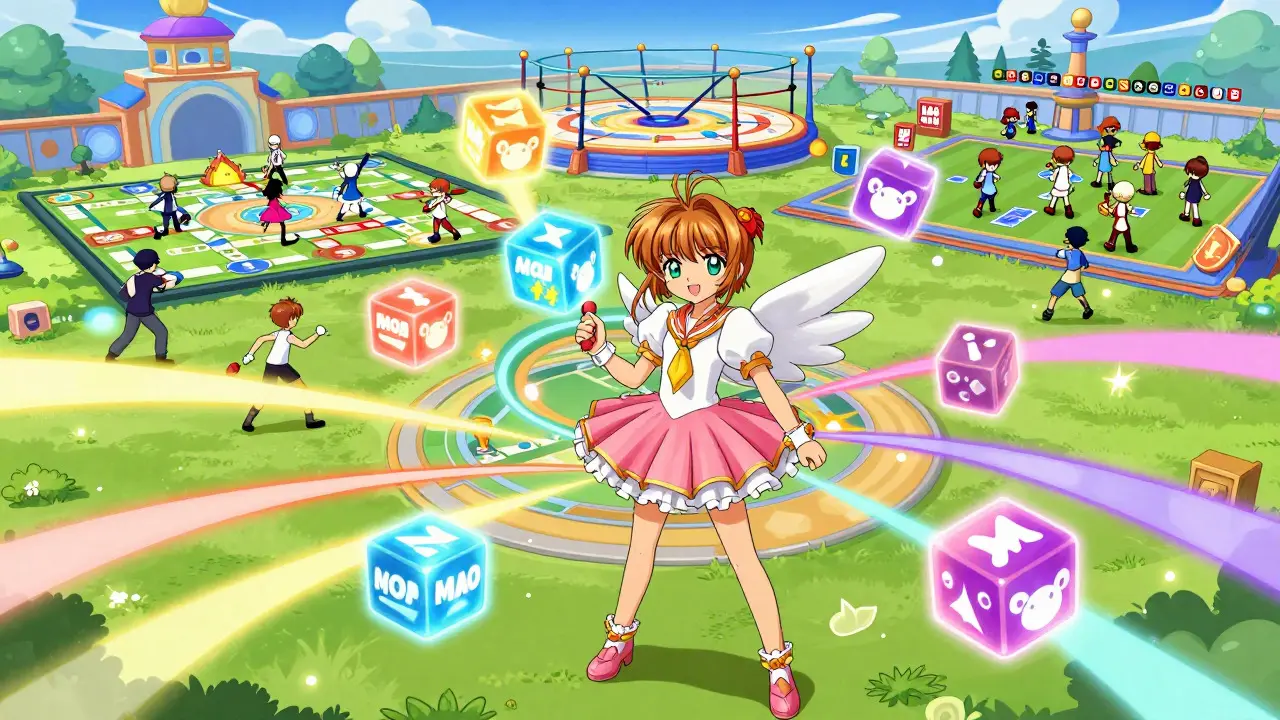
MOMOs are cubic NFT characters. They are not just collectibles; they are functional assets. Each MOMO has a specific rarity (Common, Rare, etc.) and provides hash power. Think of hash power as your mining speed. The more hash power you have, the faster you mine MEC (MOBOX Crystal).
Here is where the strategy comes in. You can increase your hash power by:
- Acquiring rarer MOMOs.
- Upgrading existing MOMOs using MEC tokens.
- Grouping MOMOs strategically to trigger bonus multipliers.
This creates a feedback loop. You use MBOX to buy or stake, you use MOMOs to generate MEC, and you use MEC to upgrade MOMOs. This complexity was noted by industry experts as a sophisticated design that encouraged long-term engagement rather than quick profit extraction.

Games Available During the Campaign
The airdrop wasn't just about tokens; it was a gateway to the platform's gaming offerings. At the time of the Expo III, MOBOX featured three distinct games, each leveraging the MOMO system differently:
- Token Master: This suite included three mini-games: MOMOpoly (a board game style), Plunder (strategy-based), and MOBOXer (action-oriented). These were designed to be accessible entry points for new users.
- Block Brawler: An RPG featuring six profession choices. It offered both PVP (Player vs Player) and PVE (Player vs Environment) modes, appealing to traditional gamers who wanted depth.
- ChainZ Arena: Launched later in December 2021, this was positioned as the first cross-blockchain, cross-platform idle RPG. Its inclusion in the broader ecosystem narrative showed MOBOX's ambition to move beyond just BSC.
User feedback highlighted that while the games were innovative, the learning curve was steep. Understanding how to optimize MOMO groups for maximum hash power required reading documentation and experimenting, which some casual users found frustrating.
Market Context and Performance
Why did this airdrop matter so much? Timing. In late 2021, the GameFi sector was exploding. Following the success of Axie Infinity, retail interest in play-to-earn models was at an all-time high. MOBOX capitalized on this momentum perfectly.
In the month preceding the Expo III, MOBOX ranked as the second-highest recipient of incoming funds among all BSC GameFi projects. This capital influx signaled strong investor confidence. When combined with the $20,000 airdrop allocation, the project demonstrated a serious commitment to user acquisition.
At the time of the campaign, MOBOX's market capitalization was around $28.73 million. Receiving 4,500 MBOX tokens represented significant potential value. For context, if you held those tokens through subsequent bull runs, the appreciation would have been substantial. Current data shows MBOX trading with daily volumes exceeding $7 million, indicating sustained liquidity and interest long after the airdrop ended.
Lessons Learned from the Campaign
For future participants in similar campaigns, the MOBOX BSC GasFi Expo III offers several key lessons:
- Speed Matters: Airdrop slots can fill up quickly. Bookmarking links and being ready at the exact start time (October 23, 2021, in this case) was crucial.
- Education is Reward: Don't skip the livestreams or quizzes. Projects like MOBOX use these to filter for serious users. Your effort in learning pays off in better understanding of the asset you receive.
- Security First: The use of CoinMarketCap as the distribution platform added a layer of trust. Always verify that airdrops are hosted on reputable platforms to avoid phishing scams.
- Long-Term View: The complexity of the MOMO system meant that immediate profits weren't guaranteed. Success required engaging with the ecosystem, upgrading NFTs, and participating in the games.
Current Status of MOBOX
Since the 2021 airdrop, MOBOX has continued to evolve. It has transitioned from a "GameFi rookie" to a established player in the metaverse space. The cross-platform vision promoted during the airdrop has materialized through the development of ChainZ Arena and integrations with other blockchains.
The initial participants who retained their MBOX allocations have benefited from the platform's growth. The market cap has grown significantly, and the daily trading volume remains robust. This demonstrates that well-executed airdrops can create lasting communities rather than temporary hype.
For those interested in the current state of the project, MBOX continues to list on major exchanges, and its ecosystem expands with new gaming verticals. The principles established during the BSC GameFi Expo III-education, engagement, and utility-remain central to its strategy.
When did the MOBOX BSC GameFi Expo III airdrop take place?
The campaign ran from October 23 to October 30, 2021. This was part of Binance Smart Chain's third annual GameFi exposition.
How many MBOX tokens could participants claim?
Participants were eligible to receive up to 4,500 MBOX tokens. This required completing specific tasks, including watching a livestream and passing a quiz.
What are MOMOs in the MOBOX ecosystem?
MOMOs are cubic NFT characters that serve as the primary mining mechanism. They provide hash power, which determines how efficiently you can mine MEC tokens. Their rarity and grouping affect overall mining efficiency.
Who else participated in the BSC GameFi Expo III?
Alongside MOBOX, Dragonary and DSG Metaverse participated in the Expo III. Together, they distributed over $60,000 worth of tokens collectively.
Is the MOBOX airdrop still active?
No, the specific BSC GameFi Expo III airdrop ended in October 2021. However, MOBOX occasionally runs smaller promotional events and staking campaigns. Always check official channels for current opportunities.
What is the difference between MBOX and MEC tokens?
MBOX is the governance and utility token used for staking and premium access. MEC (MOBOX Crystal) is the in-game currency earned through mining with MOMOs, used primarily for upgrading NFTs and enhancing gameplay.
Did MOBOX perform well financially after the airdrop?
Yes. MOBOX saw significant growth in market capitalization and trading volume following the campaign. It became one of the top-funded GameFi projects on BSC, demonstrating strong community retention and investor interest.