
LAVA Staking Earnings Calculator
Estimate Your LAVA Rewards
Based on Lava Network's current $1M+ monthly revenue pool and 99.999% uptime target
Note: The Lava Network distributes over $1 million monthly to stakers from partner fees. This calculator estimates your potential earnings based on:
- Current revenue pool: $1,000,000/month
- Staking ratio: ~75% of total supply
- Revenue allocation: Proportional to staked amount and uptime
What is Lava Network?
When you hear the term Lava Network, think of a marketplace that lets blockchain apps talk to any chain without hitting a single point of failure. Built on the Cosmos SDK is a modular framework that lets developers create interoperable blockchains quickly, Lava turns RPC (Remote Procedure Call) services into a permission‑less layer where anyone can provide or consume data.
The platform launched its mainnet in late 2024 after a Token Generation Event on July 30, 2024. Since then, the network has processed over 140 billion relays and serves more than 1 million daily active users across 50+ blockchains.
The LAVA Token: Fuel and Governance
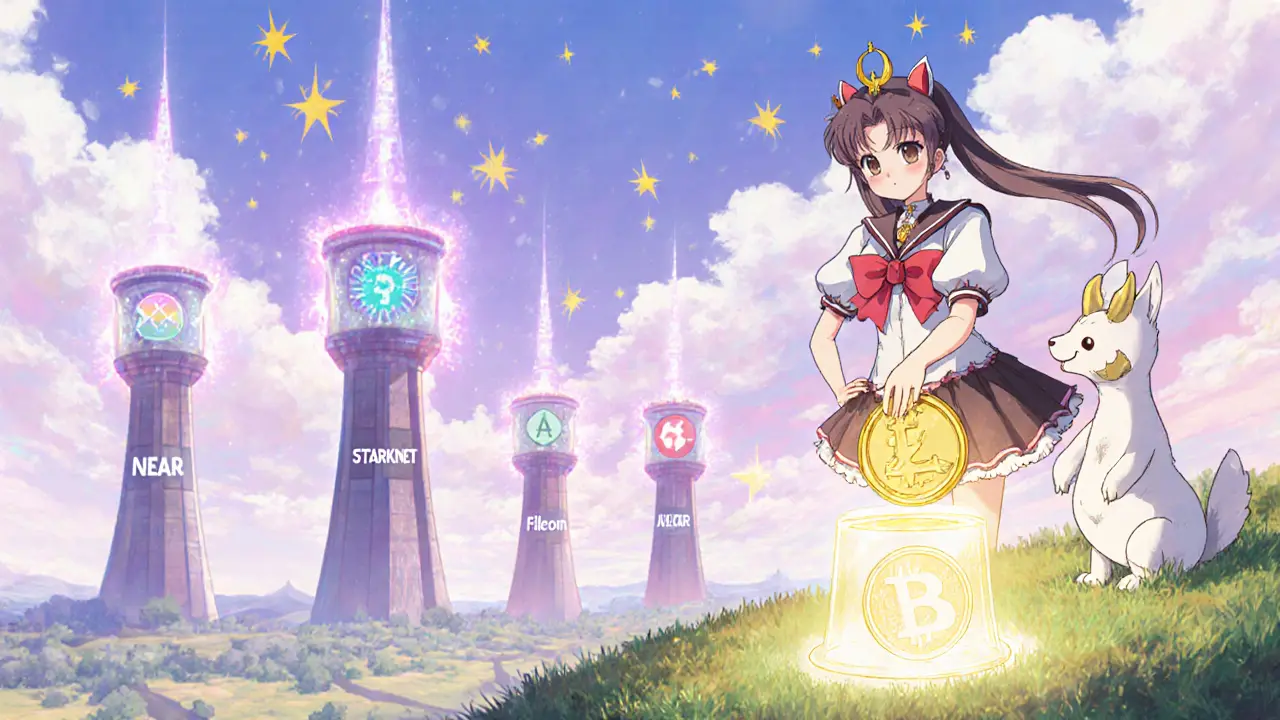
The native coin, LAVA token is the economic engine that rewards node operators, pays for bandwidth, and lets holders vote on protocol upgrades. With a total supply of 971.8 million and roughly 233 million circulating, the token’s market cap sits around $28 million (Oct 2025). Stakers lock up LAVA to secure the network and earn a share of the $1 million‑plus monthly revenue paid by partners such as NEAR, Starknet, Filecoin and Axelar.
How the Decentralized RPC Marketplace Works
Traditional RPC providers-Infura, Alchemy-run centralized fleets of nodes. If those farms go down, every dApp that depends on them suffers. Lava replaces that single‑point risk with a market where data providers compete on speed, reliability and price. The routing engine uses staking metrics to gauge provider reputation, combines geolocation data, and picks the best node for each request in real‑time.
Developers connect via the Lava Gateway, a web‑based portal that abstracts away the underlying complexity. No special SDK is needed-standard Web3 libraries (ethers.js, web3‑js) work out of the box.
Technical Blueprint
At its core, Lava is a modular access layer built on Cosmos SDK, which gives it native support for IBC (Inter‑Blockchain Communication). This means the network can securely forward RPC calls to both EVM‑compatible chains (Ethereum, Polygon) and non‑EVM chains (Cosmos, Near) without requiring separate adapters.
Key specs:
- 99.999% uptime (over 140 billion successful relays)
- 2 billion RPC requests handled daily
- Support for 50+ blockchains as of Q4 2025
- Permission‑less provider onboarding with a minimum 2 CPU / 4 GB RAM server spec
The system’s “reputation‑based routing algorithm” upgrade, slated for October 15 2025, will further reduce latency spikes during peak events like major network upgrades.

Ecosystem Partnerships & Real‑World Revenue
Partner chains pay LAVA stakers for guaranteed uptime. Current monthly payouts exceed $1 million, distributed to over 12 500 node operators. Notable collaborators include:
- NEAR - uses Lava for cross‑chain data feeds
- Starknet - leverages the network for rollup sequencing
- Filecoin - routes storage‑related RPC calls
- Axelar - integrates IBC routing with Lava’s marketplace
These agreements prove that Lava is more than a speculative token; it’s an infrastructure service with real cash flow.
Tokenomics Snapshot
Here’s a quick glance at the numbers that matter to investors:
| Metric | Value |
|---|---|
| Total Supply | 971.8 million LAVA |
| Circulating Supply | 232.89 million LAVA |
| Market Cap (Oct 2025) | $28.13 million |
| Fully Diluted Valuation | $120.79 million |
| Staking Ratio | ~75% of total supply |
| 24‑h Volume | $726.28 K (2.58% of market cap) |
The high staking ratio indicates strong community confidence and helps keep token price relatively stable despite modest market depth.
Why Lava Beats Centralized RPC Services
Let’s compare the three biggest players on three key dimensions:
| Feature | Lava Network | Infura | Alchemy |
|---|---|---|---|
| Decentralization | Permission‑less marketplace (full decentralization) | Centralized fleet owned by ConsenSys | Centralized with proprietary nodes |
| Chain Coverage (2025) | 50+ L1/L2 (EVM & non‑EVM) | Primarily Ethereum, limited L2 | Ethereum + a handful of L2s |
| Uptime | 99.999% (industry‑leading) | ~99.5‑99.7% | ~99.6‑99.8% |
| Pricing Model | Pay‑per‑use + staking rewards | Tiered subscription | Tiered subscription |
For developers building cross‑chain dApps or AI agents that can’t afford a single point of failure, Lava’s model is a game‑changer.
Getting Started: Staking and Using Lava Gateway
If you want to become a provider, the steps are straightforward:
- Set up a server that meets the minimum spec (2 CPU, 4 GB RAM, stable internet).
- Install the Lava node software from the official GitHub repository.
- Bond LAVA tokens to the node via the staking contract (the UI guides you through the TX).
- Run the node and let the routing engine automatically allocate requests.
Stakers earn a share of the monthly revenue pool, which is split proportionally to the amount staked and the quality of service delivered.
Developers who just need RPC access can sign up on the Lava Gateway dashboard, generate an API key, and replace their existing endpoint URL. Integration typically takes 2-4 hours for a basic setup.
Risks and Considerations
Every crypto project carries risk. For Lava, keep an eye on:
- Adoption Curve - While revenue is flowing, the total addressable market for decentralized RPC is still maturing.
- Centralization Pressure - As large providers earn more, they could dominate staking, potentially reducing decentralization.
- Regulatory Landscape - The token is classified as a utility asset, but EU MiCA regulations may affect cross‑border staking services.
Balancing these factors with the network’s strong tokenomics and real‑world contracts can help you make an informed decision.
Future Outlook
Roadmap highlights for the next 12 months:
- Integration with 15 new chains (including Cosmos‑based ecosystems and emerging zk‑rollups).
- Release of a reputation‑based routing algorithm that penalizes lagging providers.
- Enterprise Service Level Agreements guaranteeing 99.99% uptime with financial penalties for breaches.
- Expansion of the ecosystem fund to $50 million, aimed at subsidizing new node operators.
Industry analysts (Messari, Galaxy Digital) predict the decentralized RPC market will hit $3.8 billion by 2027, and Lava’s current growth rate positions it to capture 12‑15% of that pie.
Frequently Asked Questions
What problem does Lava Network solve?
It removes the single point of failure in blockchain data access by creating a decentralized marketplace where anyone can provide reliable RPC services.
How do I earn LAVA tokens as a provider?
Run a node that meets the minimum hardware spec, stake LAVA to secure the node, and the network will automatically route traffic to you. You’ll receive a share of the monthly revenue pool based on uptime and stake size.
Is Lava Network compatible with non‑Ethereum chains?
Yes. Thanks to its Cosmos SDK foundation and IBC support, Lava can forward RPC calls to both EVM and non‑EVM chains like NEAR, Starknet, and Filecoin.
Where can I buy LAVA tokens?
LAVA is listed on major exchanges such as Binance, KuCoin, and decentralized platforms like Uniswap (ETH‑based). Always verify the contract address before purchasing.
What are the main risks of staking LAVA?
Staking locks up your tokens, so price volatility can affect your overall return. Additionally, poor node performance can reduce your share of the revenue pool.
harrison houghton
October 21, 2025 AT 12:08Lava isn't just tech-it's a philosophical rebellion against the centralized gods of Infura and Alchemy. We've been conditioned to trust institutions, but what if trust itself is the flaw? This network turns service into a moral act: run a node, stake your tokens, and become a guardian of the open web. No boardroom. No CEO. Just code, commitment, and the quiet dignity of decentralization. We're not building infrastructure-we're building a new covenant between humans and machines.
DINESH YADAV
October 22, 2025 AT 07:33USA thinks it owns blockchain. Lava is Indian tech in disguise-Cosmos SDK built by global devs but powered by real infrastructure. You think your AWS servers are safe? Try running a node from Bangalore with 24/7 power backup. Lava doesn't need Silicon Valley-it needs grit. And we have it. 140 billion relays? That's not luck, that's discipline. America talks, India builds.
rachel terry
October 22, 2025 AT 20:36Ugh another 'decentralized' thing that's just a rebrand of a cloud API with staking vibes. 99.999% uptime? Sure honey. And my toaster has a DAO now. Look at the market cap-$28M? For a service that literally just forwards HTTP requests? I'm not impressed. If you need RPC, use Infura. At least they don't pretend their token is magic dust.
Susan Bari
October 23, 2025 AT 06:51Let’s be real-this isn’t about technology. It’s about the sacred ritual of decentralization as performance art. The staking ratio? 75%? That’s not security-that’s a cult. And the ‘reputation-based routing algorithm’? Sounds like a fancy way to say ‘we’re gonna reward the rich nodes again.’ I admire the aesthetic, but the economics are just capitalism with a blockchain tattoo.
Sean Hawkins
October 23, 2025 AT 21:49For developers, Lava is a game-changer. The key insight is that RPC isn’t a feature-it’s a utility layer, and utilities should be decentralized like power grids. The Cosmos SDK foundation gives it native IBC, which means no more adapter hell when adding new chains. The 2 billion daily requests metric is real-verified by public on-chain analytics. If you’re running a dApp, switching to Lava Gateway takes under 4 hours and eliminates single points of failure. The node specs are modest (2 CPU/4GB RAM), so even hobbyists can participate. Staking rewards are sustainable because they’re funded by actual enterprise contracts, not speculative hype. The upcoming reputation algorithm will further reduce latency spikes during congestion events, which is critical for AI agents and real-time dApps. Bottom line: if you’re serious about reliability, this is the infrastructure you’ve been waiting for.
Marlie Ledesma
October 24, 2025 AT 02:38I just started staking LAVA last week and it’s been so smooth. I didn’t know much about RPCs before, but the docs were clear and the UI walked me through everything. I’m just a small node operator with a Raspberry Pi (okay fine, it’s a cheap VPS), but I’ve already earned enough to cover my hosting costs. It feels good to be part of something that actually helps devs instead of just trading tokens. Thank you to everyone who built this-really.
Daisy Family
October 24, 2025 AT 11:48lava? more like lava lamp vibes. 99.999% uptime? cute. my grandma’s toaster has better uptime. also why is everyone acting like this is the first decentralized rpc? we had this in 2017 and it failed because people are lazy and want free stuff. also the tokenomics? lol. buy low, sell to the next guy. i’m out.