
Imagine selling a digital artwork for $10,000. You expect a cut of every future resale because that’s the promise of NFT royalties is a programmatically enforced secondary sale commission embedded in smart contracts that automatically distributes a predetermined percentage of resale proceeds to original creators. But here’s the kicker: on some platforms, you might get zero. Why? Because while the code says one thing, the market does another. As of late 2025, effective royalty rates for major collections have plummeted from pre-2022 averages of 8-10% to as low as 0.4% on certain exchanges. This isn’t just a technical glitch; it’s a fundamental shift in how value flows between traders and artists.
If you’re an artist or investor, understanding the difference between programmatic royalties (what the code allows) and enforced royalties (what the marketplace actually collects) is critical. The blockchain itself doesn’t force anyone to pay you when they trade your NFT peer-to-peer. It only records the transaction. Enforcement happens at the marketplace level, which means your income depends entirely on where people choose to buy and sell. Let’s break down how the major players handle this messy reality.
The Technical Backbone: Smart Contracts vs. Market Reality
At its core, an NFT royalty is a line of code. When a token is minted, the creator specifies a recipient address and a percentage fee. On Ethereum, this is often handled via EIP-2981 is an Ethereum Improvement Proposal that defines a standard interface for querying royalty information directly from the token contract. This standard lets marketplaces ask, "Hey, who gets paid if this sells?" before completing a trade.
However, calling this function is voluntary. A marketplace can choose to ignore the response from the smart contract. If a platform decides not to call the royalty query function, no payment is sent to the creator, even though the blockchain recorded the sale. This distinction explains why two identical NFTs can yield different earnings depending on the trading venue. The blockchain provides the ledger, but the marketplace provides the rulebook-and those rulebooks vary wildly.
For Solana-based projects, the mechanism differs slightly. Platforms rely on Metaplex Creator Standard is the dominant metadata standard for Solana NFTs that includes fields for creator addresses and royalty percentages. While Metaplex makes it easy to embed royalty data, enforcement remains a policy choice by each marketplace, not a hard constraint of the Solana network itself.
Platform Showdown: Who Actually Pays Creators?
Not all marketplaces treat creators equally. The industry has split into three distinct camps: those that enforce royalties strictly, those that make them optional, and those that largely ignore them. Here is how the major players stack up in 2026.
| Platform | Royalty Policy | Enforcement Mechanism | Max Rate Allowed | Creator Impact |
|---|---|---|---|---|
| OpenSea | Mandatory for Collections | Operator Filter Registry | 10% | High reliability for collection-level assets |
| Blur | Optional / Incentivized | BLUR Token Rewards | Varies | Low direct cash flow, high token speculation |
| Magic Eden | Optional (with Shield) | Protocol-Level Protection | Varies | Mixed results; compliance dropped after shift |
| Rarible | Mandatory | Smart Contract Logic | 50% | High flexibility, smaller liquidity pool |
| Solanart | None | No Enforcement | 0% | Zero creator revenue on secondary sales |
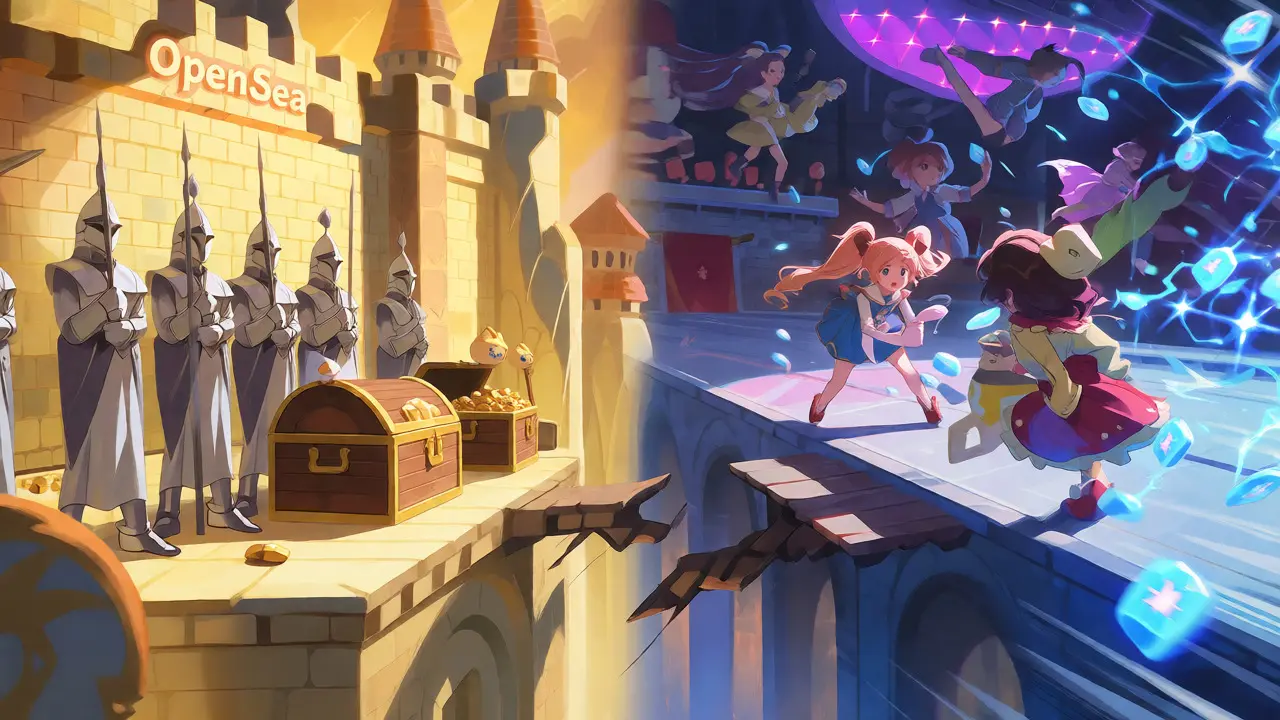
OpenSea remains the heavyweight for Ethereum. It maintains the strongest commitment to royalties through its Operator Filter Registry. This tool allows collections to add a code snippet that blocks marketplaces known for evading royalties. However, there’s a catch: OpenSea primarily enforces royalties on collections, not individual one-off pieces. If you mint a unique 1-of-1 asset without linking it to a verified collection contract, you might find yourself unprotected on some front-ends.
Blur changed the game by introducing aggressive trading incentives. Initially, Blur eliminated mandatory royalties to attract volume. They later introduced a system where buyers earn BLUR tokens for paying royalties. While this kept some revenue flowing, it shifted the value proposition from cash-in-hand to speculative token holdings. For many artists, this was a downgrade. Cash pays rent; tokens are volatile bets.
Magic Eden, the king of Solana, transitioned to optional royalties in 2022. To counter backlash, they launched "Royalty Shield" in early 2025, attempting to incentivize payments again. Early data suggests only about 35% of buyers comply voluntarily. This highlights a painful truth: once you give traders a choice, many will choose not to pay.
The Economics of Optional Royalties
Why would a marketplace drop mandatory royalties? Liquidity. High fees discourage frequent trading. When Sudoswap is a decentralized exchange protocol that pioneered zero-royalty automated market making for NFTs announced zero-royalty trading in 2022, it triggered what analysts call the "royalty wars." Competitors had to lower barriers to compete for volume.
Research published in SSRN in 2022 found a clear correlation: higher royalty rates lead to reduced primary sale prices. Artists lower their initial price tag, hoping to recoup losses through future resales. This is the "delayed gratification effect." But here’s the risk: if the secondary market dries up or moves to a royalty-free platform, the artist loses twice. They sold cheap initially and got nothing later. An artist I spoke with in Wellington noted that her Rarible-listed works earned $47,000 in royalties over 18 months, but only because she actively directed buyers away from Blur. Without that effort, those earnings could have vanished.
Conversely, enforced royalties create price inefficiencies. NFTs with guaranteed royalties often trade at a 5-8% premium compared to identical assets on royalty-optional platforms. Traders factor the cost into their bid. So, while artists get paid, the asset becomes less attractive to flippers who operate on thin margins.
Cross-Chain Complexity and Standards
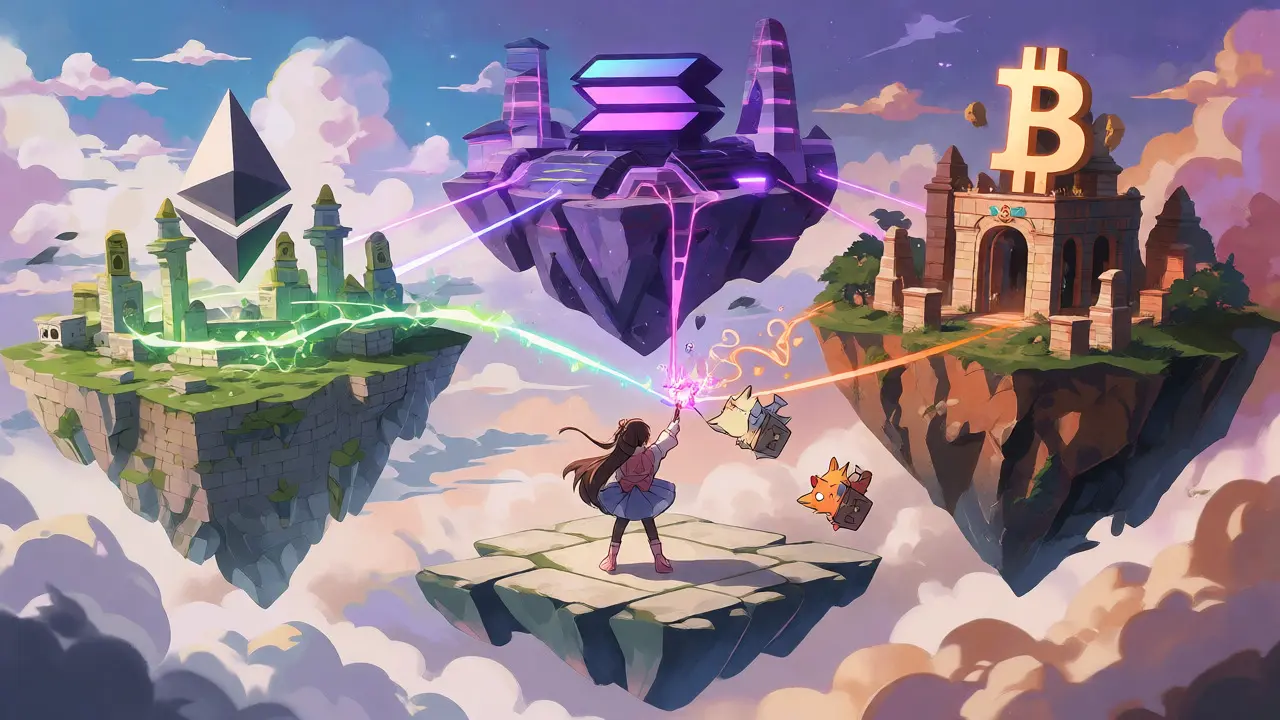
If you think managing royalties on one chain is hard, try doing it across several. A popular NFT might be minted on Ethereum, traded on Polygon, and held in a Bitcoin Ordinals wallet. Each ecosystem handles metadata differently.
- Ethereum/Polygon: Relies heavily on EIP-2981. Compatibility is good among major wallets like MetaMask and Rainbow, but niche DEXs may skip the check.
- Solana: Uses Metaplex. Magic Eden and Tensor generally respect the standard, but Solanart historically ignored it completely.
- Bitcoin Ordinals: Still emerging. Most current marketplaces do not support native royalty enforcement due to the UTXO model complexity, though new protocols are testing solutions.
This fragmentation forces creators to adopt a multi-pronged strategy. You cannot rely on a single platform’s goodwill. Tools like Royalty Registry is a community-developed indexing service that attempts to unify royalty data across incompatible blockchain standards help bridge gaps, but they are not perfect. Always verify where your primary audience trades. If your collectors live on Blur, your royalty rate matters less than your token incentive structure.
Practical Tips for Creators and Investors
So, what should you actually do? If you’re creating NFTs, don’t just set a number and hope for the best. Treat royalties as part of your distribution strategy.
- Check Platform Support Before Minting: If you want guaranteed cash flow, stick to platforms like OpenSea or Rarible that enforce fees. If you prioritize volume and hype, accept that Blur or X2Y2 might offer better liquidity but worse royalty collection.
- Use Collection-Level Contracts: On OpenSea, individual listings often bypass royalty checks. Minting as part of a larger collection ensures the Operator Filter applies to all units.
- Monitor Blacklist Features: Some artists, like Tyler Hobbs, actively blacklist marketplaces that evade royalties. This protects their brand integrity but can limit reach. Decide if purity is worth lost exposure.
- Diversify Your Income: Don’t rely solely on secondary royalties. Primary sales, licensing deals, and physical merchandise provide stability when crypto markets turn bearish and trading volume drops.
For investors, understand that buying on a royalty-free platform might mean getting a discount. The seller didn’t have to pay a fee, so they might price lower. But remember, this also means the artist gets nothing from your flip. Ethical investing now involves considering whether you want to support the creator ecosystem directly.
Are NFT royalties legally binding?
No, not in the traditional legal sense. NFT royalties are enforced by smart contract logic within specific marketplaces. If a buyer and seller trade peer-to-peer (P2P) outside of a compliant marketplace, they can agree to any terms, including ignoring the coded royalty. There is currently no global law mandating NFT royalty payments.
Can I change my royalty rate after minting?
It depends on the smart contract. Many standard ERC-721 contracts allow the owner to update royalty settings via functions like `setRoyaltyInfo`. However, some immutable contracts lock these values at deployment. Always check the contract documentation or use a block explorer to see if the royalty address is mutable.
Why did Magic Eden switch to optional royalties?
To increase trading volume. Mandatory royalties act as a tax on traders, reducing liquidity. By making them optional, Magic Eden attracted more buyers and sellers who wanted to avoid fees, competing directly against other Solana marketplaces that offered similar incentives.
Do royalties apply to private sales?
Generally, no. Private sales usually occur off-chain or via simple transfers that do not interact with the marketplace’s royalty-enforcing smart contracts. Unless both parties manually execute a payment to the creator’s address, the royalty is often skipped.
What is the average royalty rate in 2026?
While 5-10% was common in 2021, the landscape has fragmented. Mandatory platforms still hover around 5%, but effective realized rates on optional platforms can be near zero. Analysts predict a stabilization around 2-4% across major platforms by 2027 as competition balances out.